Gender Equality and Human Rights Progress
Gender equality is closely connected to human rights. The ability to access education, work, healthcare, political participation, safety, and economic opportunities without discrimination is part of the broader framework of equal rights.
Over the past several decades, countries have introduced legal reforms, expanded access to education, increased protections against discrimination, and created programs supporting women's participation in public and economic life. At the same time, progress remains uneven, and significant gaps continue to exist. The 2025 review of the Beijing Declaration and Platform for Action found both substantial advances and persistent discrimination across societies and economies.
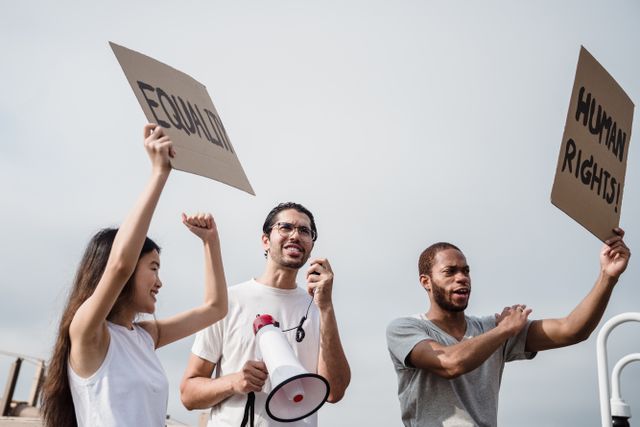
Understanding Gender Equality as a Human Rights Issue
Gender equality means that people should be able to enjoy their human rights and opportunities without discrimination based on gender.
This can involve areas such as:
- Access to education
- Employment and economic opportunities
- Equal treatment under the law
- Political participation
- Healthcare
- Protection from violence
- Participation in decision-making
These areas are interconnected. For example, limited access to education can affect employment opportunities, while unequal access to economic resources can affect a person's ability to make independent choices.
Progress in Education
Education has been one area where significant progress has been documented.
Globally, girls now surpass boys in school enrollment and completion at several levels, although important regional differences remain. Girls continue to face disadvantages in secondary education in some regions, demonstrating that overall progress does not mean equal outcomes everywhere.
Education can also influence later opportunities by improving access to employment, skills, and participation in community life.
Legal Protections and Reform
Changing laws has been an important part of advancing gender equality.
UN Women reports that 99 positive legal reforms addressing discrimination and gender equality were introduced globally over the five years covered by its recent Gender Snapshot. However, discriminatory legal frameworks remain in many countries, and protections differ substantially between jurisdictions.
Legal reform can address areas such as employment discrimination, family law, violence against women, property rights, and access to public services.
Women's Participation in Public Life
Participation in political and public decision-making is another area of measurable change.
As of January 2025, women held 27.2% of seats in national parliaments worldwide, an increase from 2015. However, representation remains below equal participation, and women continue to be underrepresented in many leadership positions.
Participation is relevant to human rights because decision-making institutions influence laws, budgets, public services, and other matters that affect people's everyday lives.
Economic Equality
Economic rights include access to employment, fair working conditions, income, social protection, and opportunities to participate in economic life.
Progress in these areas has been accompanied by continuing gaps. Unequal unpaid care responsibilities, differences in employment opportunities, and barriers to leadership can affect women's economic independence.
UN Women identifies investment in care systems, social protection, decent work, equal pay, entrepreneurship, and digital inclusion among the areas requiring continued attention.
Addressing Violence and Discrimination
Protection from violence is a fundamental human rights concern.
Governments and organizations have introduced laws, prevention programs, survivor services, and data-collection systems to address violence against women and girls. UN Women reports that its work from 2022 to 2025 included support for strengthened laws and services across more than 100 countries.
At the same time, violence remains widespread globally. This means that adopting legal protections is only one part of the challenge; implementation, access to services, prevention, and accountability also matter.
Gender Equality and Digital Access
Digital technology creates new opportunities for education, employment, communication, and financial services.
However, access to technology is not equally distributed. The global gender gap in mobile phone ownership narrowed between 2021 and 2024, but a gap remained.
Improving digital access can therefore be relevant to both economic participation and access to information.
Progress Is Not the Same Everywhere
One of the most important points when discussing gender equality is that global averages can hide major differences between countries and communities.
|
Area |
Documented Progress |
Continuing Challenge |
|
Education |
Girls have surpassed boys in global enrollment and completion in several measures |
Regional gaps remain |
|
Legal rights |
Numerous discriminatory laws have been reformed |
Discriminatory frameworks still exist |
|
Political representation |
Women's parliamentary representation has increased |
Women remain underrepresented |
|
Economic participation |
More attention to equal work and social protection |
Employment and care gaps persist |
|
Violence prevention |
More laws, services, and prevention measures |
Violence remains widespread |
|
Digital access |
The mobile ownership gap has narrowed |
A gender gap remains |
These differences are why progress needs to be assessed using both global trends and local evidence.
The Role of Human Rights Frameworks
International human rights frameworks provide standards that countries can use when developing laws and institutions.
The Beijing Declaration and Platform for Action, adopted in 1995, established a broad framework for advancing women's rights. Thirty years later, a review involving 159 countries found that many countries had made progress while also identifying persistent discrimination and areas requiring further action.
Human rights frameworks can therefore provide a basis for evaluating whether legal and institutional systems protect equality in practice.
Why Data Matters
Reliable data helps researchers and policymakers identify gaps that might otherwise remain hidden.
Statistics can reveal differences in employment, education, health, political representation, income, safety, or access to technology. However, data needs to be interpreted in context because averages can conceal differences between regions and population groups.
UN Women has reported increased production of gender-related data as part of efforts to measure progress toward the Sustainable Development Goals.
Looking Ahead
Recent UN assessments describe gender equality progress as mixed: important gains have been achieved, but many targets are not currently on track for the 2030 Sustainable Development Goals.
Future progress depends on factors including legal implementation, access to education and healthcare, economic opportunities, protection from violence, political participation, and reliable data.
The pace of change can also differ considerably between countries and between different areas of life.

Conclusion
Gender equality and human rights progress are closely connected. Legal reforms, improvements in education, greater political representation, expanded services, and increased attention to economic and digital inclusion demonstrate meaningful changes over recent decades.
At the same time, persistent discrimination, unequal economic opportunities, underrepresentation, violence, and gaps in access show that progress is incomplete.
Understanding both achievements and remaining challenges provides a clearer picture of how gender equality has developed and where further work is still needed.
Frequently Asked Questions
Researchers use indicators covering areas such as education, employment, political representation, legal protections, health, violence, economic participation, and access to technology.


Was This Article Helpful?
Click on a star to rate it!
Thank you for your vote!

Average Rating: 5/5 Votes: 1
Be the first to rate this post!

Proficient background in project planning, execution, and continuous improvement. Experienced in analyzing ideas and forecasting project success, defining requirements and timelines, and managing communication across cross-functional teams. Skilled in creating and maintaining project documentation, automating processes, and making data-driven decisions in critical situations.
View LinkedIn ProfileLatest Posts

Marine Life Conservation Initiatives
Sustainable Agriculture and Food Systems
Gender Equality and Human Rights Progress