Sustainable Agriculture and Food Systems
Agriculture provides the food people eat, supports rural economies, and shapes landscapes around the world. But producing food also uses land, water, energy, and other resources. Sustainable agriculture aims to meet today's food needs while protecting the resources and ecosystems that future food production depends on.
A sustainable food system goes beyond what happens on a farm. It includes growing, processing, transporting, selling, preparing, and consuming food. Looking at the entire system can reveal opportunities to reduce waste, protect natural resources, and make food production more resilient.
What Is Sustainable Agriculture?
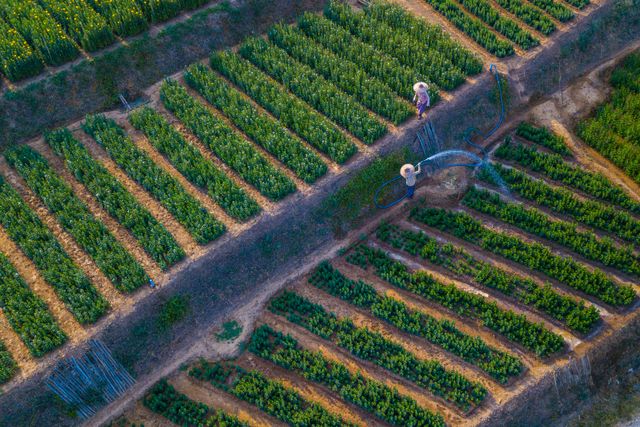
Sustainable agriculture uses farming practices designed to maintain productivity while reducing unnecessary pressure on soil, water, biodiversity, and other natural resources.
There isn't one universal method. Depending on local conditions, farmers may use crop rotation, cover crops, integrated pest management, agroforestry, improved irrigation, reduced tillage, or other approaches.
The most suitable practices depend on factors such as climate, soil type, available technology, farm size, and the crops being produced.
Protecting Soil Health
Healthy soil is one of the foundations of agriculture.
Repeatedly growing the same crop, excessive tillage, erosion, and poor nutrient management can degrade soil over time. Sustainable farming practices can help maintain soil structure and organic matter.
Crop rotation is one example. Instead of planting the same crop in the same field every year, farmers rotate different crops that have different nutrient requirements and root systems.
Cover crops can also protect soil between growing seasons.
Using Water More Efficiently
Agriculture is a major user of freshwater, making efficient water management important in many regions.
Farmers can use technologies and practices such as drip irrigation, soil-moisture monitoring, improved irrigation scheduling, rainwater management, and drought-tolerant crop varieties where appropriate.
The goal is not simply to use less water in every situation, but to use available water effectively while maintaining productive crops.
Supporting Biodiversity
Agricultural landscapes can provide habitat for pollinators, birds, insects, and other organisms when they include diverse vegetation and natural areas.
Hedgerows, field margins, agroforestry systems, and other habitat features can create spaces for wildlife while contributing to ecosystem functions.
Biodiversity can also support agriculture through pollination and natural pest control.
Reducing Reliance on Harmful Inputs
Fertilizers and pesticides can play important roles in agriculture, but inappropriate use can create environmental problems.
Integrated pest management combines monitoring, prevention, biological controls, and targeted pesticide use when necessary. This approach aims to manage pests while reducing unnecessary chemical applications.
Nutrient management similarly focuses on applying appropriate amounts of nutrients at the right time and place.
Technology in Sustainable Farming
Modern technology can help farmers make more precise decisions.
GPS-guided machinery, satellite imagery, drones, soil sensors, weather information, and farm-management software can provide detailed information about fields.
|
Sustainable Approach |
Main Purpose |
Example |
|
Crop rotation |
Maintain soil health |
Alternating crops between seasons |
|
Cover crops |
Protect and improve soil |
Planting vegetation between main crops |
|
Precision agriculture |
Use resources more efficiently |
Variable-rate fertilizer application |
|
Integrated pest management |
Manage pests responsibly |
Combining monitoring and targeted controls |
|
Agroforestry |
Combine trees and crops or livestock |
Trees integrated into farmland |
|
Efficient irrigation |
Improve water use |
Drip irrigation and soil monitoring |
|
Food waste reduction |
Use resources more effectively |
Better storage and distribution |
Technology doesn't automatically make farming sustainable, but it can give farmers better information for making resource-management decisions.
Reducing Food Waste
Sustainability doesn't end when crops leave the farm.
Food can be lost during harvesting, storage, transportation, retail, food preparation, and consumption. When food is wasted, the land, water, energy, labor, and other resources used to produce it are also used without providing the intended benefit.
Better storage, transportation, inventory management, food processing, and consumer planning can all help reduce unnecessary waste.
Local and Regional Food Systems
Local food systems can connect farmers more directly with consumers through farmers' markets, community-supported agriculture, local retailers, and other distribution models.
Shorter supply chains may reduce transportation distances in some situations, but the environmental impact of food depends on many factors, including production methods, transportation efficiency, storage, and the type of food.
Local does not automatically mean more sustainable, but regional food networks can provide economic and social benefits for some communities.
Supporting Farmers and Rural Communities
Sustainable food systems also need to be economically viable.
Farmers need access to markets, financing, technology, knowledge, infrastructure, and fair opportunities to earn a living from their work.
A farming practice that improves environmental outcomes but is financially impossible for farmers to maintain may be difficult to sustain over the long term.
This is why environmental, economic, and social considerations need to be considered together.
Climate Change and Agriculture
Agriculture is affected by changing temperatures, rainfall patterns, droughts, floods, pests, and other environmental pressures.
Sustainable agricultural practices can contribute to resilience by improving soil health, managing water, diversifying crops, and protecting ecosystems.
Some farming practices can also reduce greenhouse gas emissions or increase carbon storage, although the potential varies significantly by location and management method.
Building More Resilient Food Systems
A resilient food system can continue providing food despite disruptions such as extreme weather, supply-chain problems, market changes, or disease outbreaks.
Diversifying crops, maintaining healthy soils, improving storage, strengthening local infrastructure, and using multiple distribution channels can all contribute to resilience.
There is no single solution. Resilience often comes from having several complementary systems working together.
The Role of Consumers
Consumers also influence food systems through purchasing, preparation, storage, and waste habits.
People can reduce waste by planning meals, storing food properly, using leftovers, and understanding expiration and quality dates. Choosing a varied diet and considering how food is produced can also influence demand.
Individual choices are only one part of a much larger system, but they can work alongside changes by farmers, businesses, institutions, and governments.
Conclusion
Sustainable agriculture and food systems aim to balance food production with environmental protection, economic viability, and long-term resilience.
Healthy soils, efficient water use, biodiversity, responsible input management, technology, waste reduction, and support for farming communities all have a role to play.
There is no universal formula for sustainable agriculture. Effective solutions depend on local conditions and require cooperation across the entire food system—from farmers and processors to retailers, consumers, and communities.
Frequently Asked Questions
Consumers can reduce food waste, store food properly, plan purchases, use leftovers, and consider products and producers that align with their environmental and social priorities.


Was This Article Helpful?
Click on a star to rate it!
Thank you for your vote!

Average Rating: 0/5 Votes: 0
Be the first to rate this post!

Tech entrepreneur & digital strategist with over 9 years of experience in backend development and more than 5 years in executive leadership. Education Software and Web developer. More than 20 years of experience in software and web development.
View LinkedIn ProfileLatest Posts

Marine Life Conservation Initiatives
Sustainable Agriculture and Food Systems

Gender Equality and Human Rights Progress