Famous Scientists and Their Contributions to Science
Throughout history, numerous scientists have made profound contributions to our understanding of the natural world, shaping the course of scientific inquiry and technological advancement. Here's a glimpse into the lives and achievements of some of the most famous scientists across various disciplines:
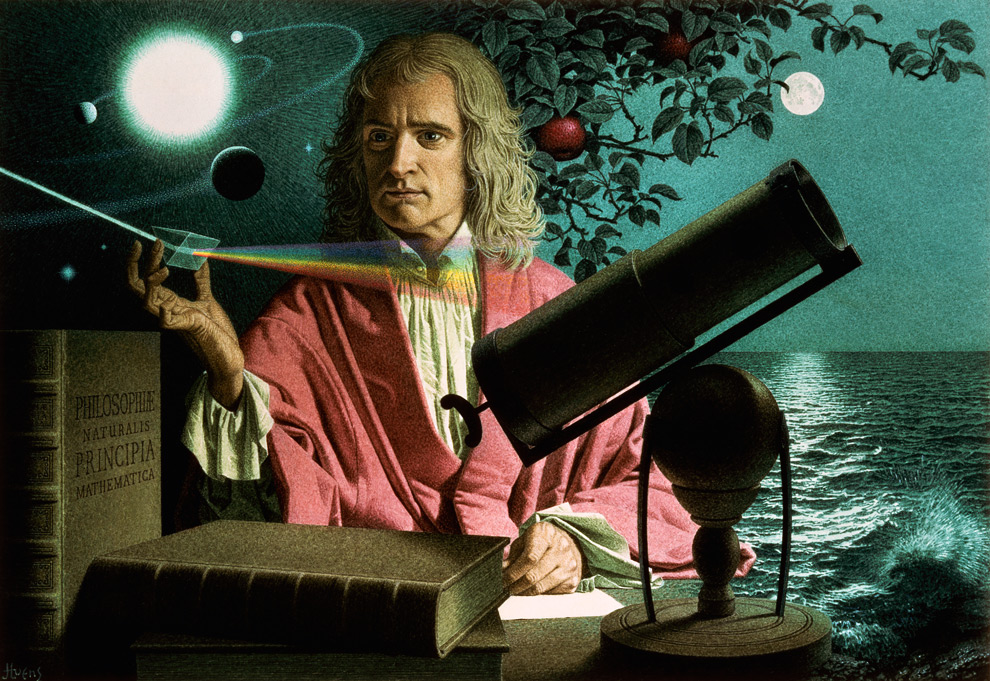

Sir Isaac Newton (1643-1727)
Contributions: Isaac Newton, an English mathematician, physicist, and astronomer, formulated the laws of motion and universal gravitation. His masterpiece, "Philosophiæ Naturalis Principia Mathematica," laid the foundation for classical mechanics and explained the motion of objects on Earth and in space.
Impact: Newton's work revolutionized physics, providing a framework that remains fundamental in understanding the universe's mechanics and influencing scientific thought for centuries.
Albert Einstein (1879-1955)
Contributions: Albert Einstein, a theoretical physicist of German-Swiss origin, is best known for his theory of relativity, including the famous equation
E = mc²
His work fundamentally changed the understanding of space, time, and energy.
Impact: Einstein's theories revolutionized physics, leading to advancements in cosmology, quantum mechanics, and the development of technologies like nuclear energy and GPS.
Marie Curie (1867-1934)
Contributions: Marie Curie, a physicist and chemist of Polish origin, conducted pioneering research on radioactivity. She discovered the elements polonium and radium, and her work laid the groundwork for the development of X-ray technology.
Impact: Curie's contributions to radioactivity and radiation therapy transformed medical diagnostics and treatments, while her advocacy for scientific research and education opened doors for women in science.
Charles Darwin (1809-1882)
Contributions: Charles Darwin, an English naturalist and geologist, proposed the theory of evolution through natural selection in his book "On the Origin of Species" (1859). His work revolutionized biology by explaining the diversity of life on Earth and its adaptation to environmental changes.
Impact: Darwin's theory remains a cornerstone of modern biology, influencing fields such as genetics, ecology, and medicine, and providing insights into biodiversity and conservation.
Nikola Tesla (1856-1943)
Contributions: Nikola Tesla, a Serbian-American inventor and electrical engineer, made significant contributions to the development of alternating current (AC) electricity transmission and radio technology. He also pioneered early developments in wireless communication.
Impact: Tesla's inventions and innovations laid the groundwork for modern electrical power systems, revolutionizing industries and enabling the widespread distribution of electricity.
Rosalind Franklin (1920-1958)
Contributions: Rosalind Franklin, a British biophysicist and X-ray crystallographer, played a crucial role in the discovery of the structure of DNA. Her X-ray diffraction images provided critical evidence of DNA's double helix structure.
Impact: Franklin's work paved the way for James Watson, Francis Crick, and Maurice Wilkins to elucidate the DNA structure, a breakthrough that revolutionized genetics and molecular biology.
Stephen Hawking (1942-2018)
Contributions: Stephen Hawking, a British theoretical physicist and cosmologist, made groundbreaking discoveries in black hole physics and cosmology. His work on the nature of space, time, and the universe's origins gained widespread acclaim.
Impact: Hawking's contributions, including his theories on black hole radiation and the universe's expansion, advanced our understanding of the cosmos and inspired new avenues of research in theoretical physics.

These scientists represent just a glimpse into the vast array of individuals whose contributions have shaped our understanding of the natural world and transformed society through science and innovation. Their discoveries continue to influence scientific inquiry, technological development, and our collective knowledge, underscoring the importance of curiosity, creativity, and perseverance in advancing human understanding and progress.


Was This Article Helpful?
Click on a star to rate it!
Thank you for your vote!

Average Rating: 4.2/5 Votes: 15
Be the first to rate this post!

Latest Posts

Conflict Resolution in Relationships

How to Develop a Growth Mindset

How Diet Affects Energy Levels