Earth's plate tectonics may have been sparked by a catastrophe that created the moon
Earth's plate tectonics may have been sparked by a catastrophe that created the moon
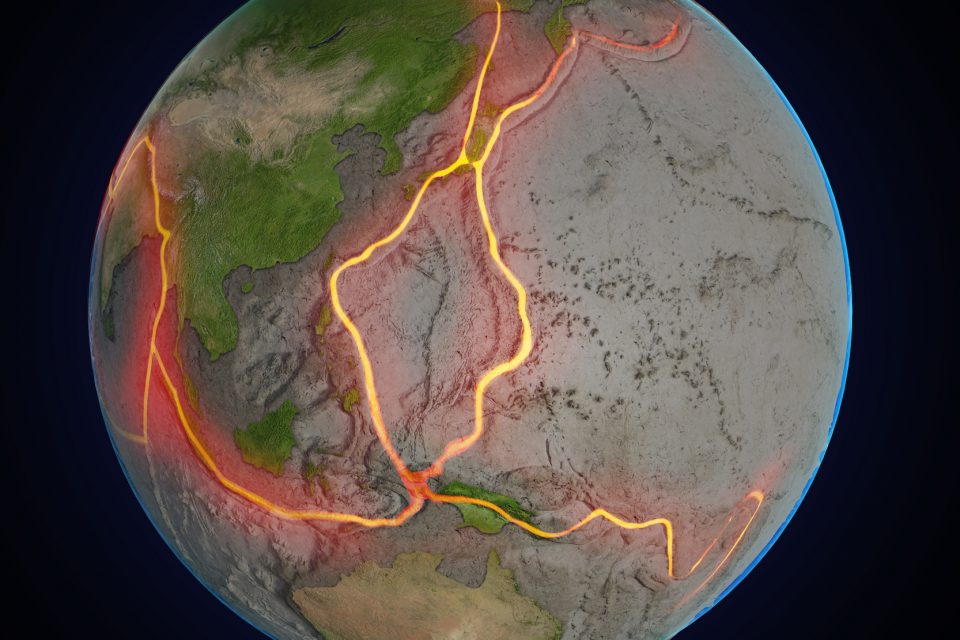
It's possible that Earth's plate tectonics began as a result of remnants of a moon-forming cataclysm.
The primary hypothesis for how the moon formed is that a Mars-sized planet called Theia collided with the young Earth, sending a cloud of debris into space that subsequently congealed into a satellite (SN: 3/2/18). Geodynamicist Qian Yuan of Caltech presented his findings at the Lunar and Planetary Science Conference on March 13 and suggested that new computer simulations suggest that the alleged remains of Theia deep inside the planet may have also caused the beginning of subduction, a feature of contemporary plate tectonics.
The narrative provides a cogent justification for how Earth acquired its moon and its shifting tectonic plates, and it may help in the search for additional Earth-like planets. Nonetheless, experts advise against making this conclusion just yet.
It's possible that Earth's plate tectonics began as a result of remnants of a moon-forming cataclysm.
The primary hypothesis for how the moon formed is that a Mars-sized planet called Theia collided with the young Earth, sending a cloud of debris into space that subsequently congealed into a satellite (SN: 3/2/18). Geodynamicist Qian Yuan of Caltech presented his findings at the Lunar and Planetary Science Conference on March 13 and suggested that new computer simulations suggest that the alleged remains of Theia deep inside the planet may have also caused the beginning of subduction, a feature of contemporary plate tectonics.
The narrative provides a cogent justification for how Earth acquired its moon and its shifting tectonic plates, and it may help in the search for additional Earth-like planets. Nonetheless, experts advise against making this conclusion just yet.
Our planet is the only one yet identified whose existence of plate tectonics has been established (SN: 1/13/21). Earth's moving plates have been enlarging, colliding, and plunging under one another for billions of years, giving birth to and severing continents, raising mountain ranges, and enlarging seas (SN: 4/22/20, SN: 1/11/17). Yet, all of this reshaping has also largely obscured the planet's prehistoric past, particularly the precise beginning and timing of plate tectonics.
Our planet is the only one yet identified whose existence of plate tectonics has been established (SN: 1/13/21). Earth's moving plates have been enlarging, colliding, and plunging under one another for billions of years, giving birth to and severing continents, raising mountain ranges, and enlarging seas (SN: 4/22/20, SN: 1/11/17). Yet, all of this reshaping has also largely obscured the planet's prehistoric past, particularly the precise beginning and timing of plate tectonics.
One plate sliding beneath another is a tectonic process known as subduction, and its beginning has been the subject of several theories (SN: 5/2/22; SN: 6/5/19; SN: 1/2/18). Large low-shear velocity provinces are two continent-sized blobs of material in the lower mantle of the Earth that Yuan and his colleagues have chosen to concentrate on (SN: 5/12/16). Seismic waves are known to travel across these areas at extremely low speeds. These areas may have developed from ancient, subducting plates, according to research from the past. Theia's thick, submerged remains were an alternate explanation put up by Yuan and colleagues in 2021 for the unexplained masses.
Based on that earlier study, the scientists used computer simulations to determine the effects of Theia's impact and any residual effects on the Earth's internal rock flow.
Scientists discovered that once these hot extraterrestrial blobs had reached the mantle's base, they may have caused enormous plumes of heated rock to rise and slam against the planet's hard crust. Around 200 million years after the moon formed, subduction began as upwelling continued to feed into the raised plumes, which expanded and drove chunks of Earth's surface under them.
While the models imply the huge low-shear velocity provinces may have helped initiate subduction, it is still unclear if these masses originated from Theia. Geodynamist Laurent Montési of the University of Maryland in College Park claims that the characteristics were just recently discovered. They're quite intriguing structures with a very obscure origin. It is thus early to claim that Theia initiated plate tectonics, according to him.
It is intriguing. The huge low-shear velocity provinces, according to Montési, are made of something unusual. But it didn't have to be alien at first.
Yet if verified, the explanation may have effects beyond our solar system. Yuan said that if you have a big moon, you probably have a big impactor. A similar exomoon has yet to be verified by scientists (SN: 4/30/19). Yet, keeping an eye out could lead us to discover an universe that is just as tectonically active as our own, according to Yuan.
One plate sliding beneath another is a tectonic process known as subduction, and its beginning has been the subject of several theories (SN: 5/2/22; SN: 6/5/19; SN: 1/2/18). Large low-shear velocity provinces are two continent-sized blobs of material in the lower mantle of the Earth that Yuan and his colleagues have chosen to concentrate on (SN: 5/12/16). Seismic waves are known to travel across these areas at extremely low speeds. These areas may have developed from ancient, subducting plates, according to research from the past. Theia's thick, submerged remains were an alternate explanation put up by Yuan and colleagues in 2021 for the unexplained masses.
Based on that earlier study, the scientists used computer simulations to determine the effects of Theia's impact and any residual effects on the Earth's internal rock flow.
Scientists discovered that once these hot extraterrestrial blobs had reached the mantle's base, they may have caused enormous plumes of heated rock to rise and slam against the planet's hard crust. Around 200 million years after the moon formed, subduction began as upwelling continued to feed into the raised plumes, which expanded and drove chunks of Earth's surface under them.
While the models imply the huge low-shear velocity provinces may have helped initiate subduction, it is still unclear if these masses originated from Theia. Geodynamist Laurent Montési of the University of Maryland in College Park claims that the characteristics were just recently discovered. They're quite intriguing structures with a very obscure origin. It is thus early to claim that Theia initiated plate tectonics, according to him.
It is intriguing. The huge low-shear velocity provinces, according to Montési, are made of something unusual. But it didn't have to be alien at first.
Yet if verified, the explanation may have effects beyond our solar system. Yuan said that if you have a big moon, you probably have a big impactor. A similar exomoon has yet to be verified by scientists (SN: 4/30/19). Yet, keeping an eye out could lead us to discover an universe that is just as tectonically active as our own, according to Yuan.


Was This Article Helpful?
Click on a star to rate it!
Thank you for your vote!

Average Rating: 4.3/5 Votes: 23
Be the first to rate this post!

Latest Posts

Conflict Resolution in Relationships

How to Develop a Growth Mindset

How Diet Affects Energy Levels