Minimalist Interior Design Ideas: Simple Spaces That Feel Peaceful and Modern
Minimalist interior design is more than just “less stuff.” It’s a lifestyle choice that focuses on clarity, calmness, and purpose. In a world full of noise and clutter, minimalist spaces offer something refreshing—room to breathe.
The good news? You don’t need a luxury budget or a complete home renovation to achieve it. Let’s explore practical minimalist design ideas that can transform any space.
Start with the “Less But Better” Mindset
Minimalism isn’t about empty rooms. It’s about keeping only what truly adds value.
Ask yourself:
- Do I use this item regularly?
- Does it bring me joy or function?
- Does it improve the space or clutter it?
Think of your home like a well-edited photo—every element should have a purpose.
Choose a Neutral Color Palette
Color plays a huge role in minimalist design.
Most minimalist interiors use:
- White
- Beige
- Soft gray
- Earth tones
These colors create a calm and open feeling. They also reflect natural light, making rooms appear larger and cleaner.
You can still add personality—just keep bold colors as accents, not the main theme.
Focus on Functional Furniture
In minimalist design, every piece of furniture should earn its place.
Look for:
- Multi-functional furniture (like storage beds or foldable tables)
- Clean lines and simple shapes
- Compact designs that save space
- Quality over quantity
Instead of filling a room, each item should serve a clear purpose.
It’s like choosing team players—only the useful ones stay on the field.
Declutter Ruthlessly (But Thoughtfully)
Clutter is the enemy of minimalism.
A simple approach:
- Remove items you don’t use
- Store seasonal items out of sight
- Keep surfaces as clear as possible
- Organize everything into designated spaces
The goal isn’t to make your home empty—it’s to make it intentional.
Table: Traditional vs Minimalist Interior Design
|
Feature |
Traditional Design |
Minimalist Design |
|
Furniture |
Many decorative pieces |
Few functional pieces |
|
Colors |
Mixed and bold |
Neutral and soft |
|
Decor |
Heavy decoration |
Simple accents |
|
Space |
Filled rooms |
Open, breathable layout |
|
Maintenance |
High effort |
Easy to maintain |
Let Natural Light Do the Work
Natural light is one of the most powerful tools in minimalist design.
To maximize it:
- Use light curtains or blinds
- Avoid blocking windows with large furniture
- Keep mirrors to reflect light
- Use open layouts where possible
A bright room instantly feels cleaner, bigger, and more peaceful.
Add Texture Instead of Clutter
Minimalism doesn’t mean boring. You can still create depth and warmth through textures.
Try:
- Linen or cotton fabrics
- Wooden furniture
- Stone or ceramic accents
- Soft rugs and cushions
Instead of adding more items, you add more feeling through materials.
Keep Decor Intentional
Every decorative item should have meaning.
Good minimalist decor includes:
- One or two statement pieces
- Simple artwork or photography
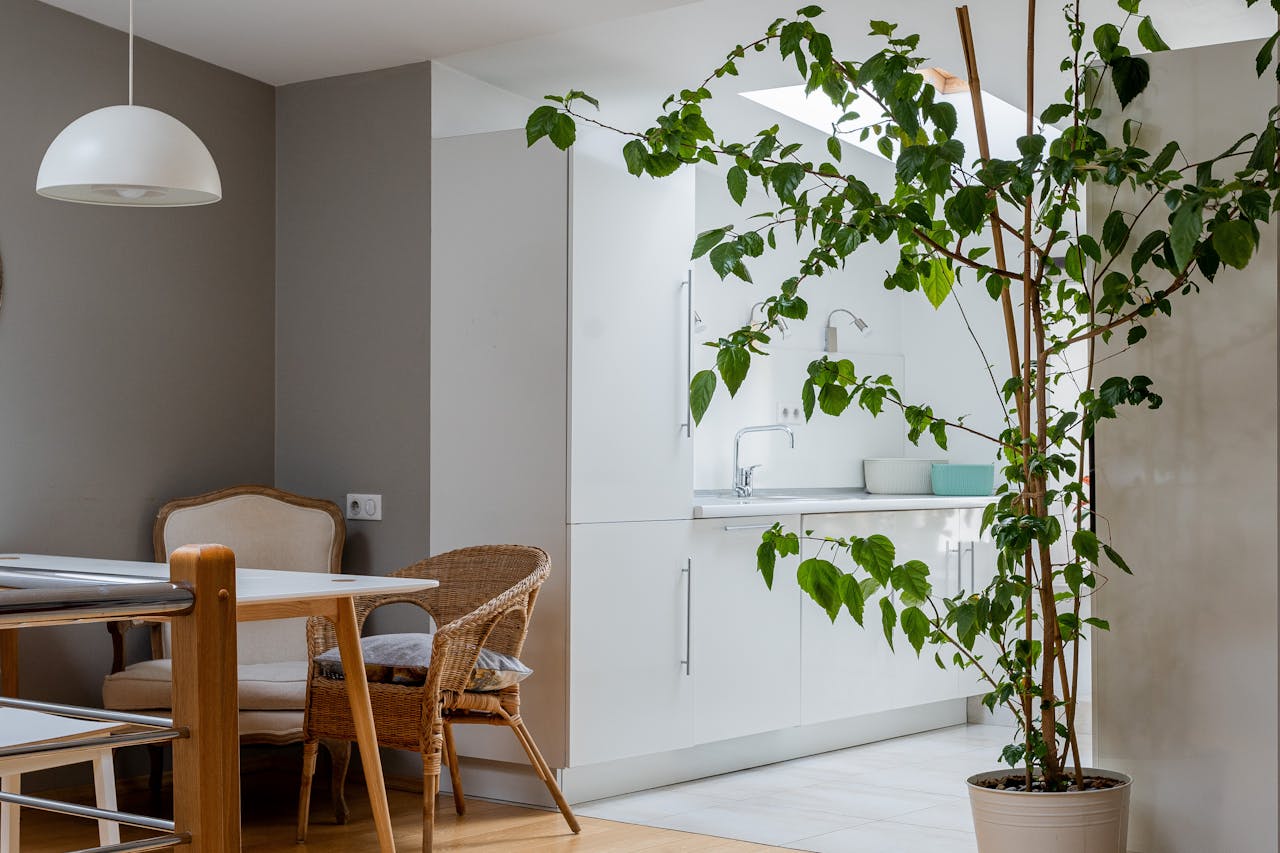
- Indoor plants for freshness
- Functional decor (like stylish storage)
Less decoration, more impact.
Think of it like a spotlight—focus on a few things instead of lighting up everything.
Smart Storage Solutions
A clean minimalist space depends on hidden storage.
Ideas include:
- Built-in cabinets
- Under-bed storage
- Floating shelves
- Multi-purpose furniture with compartments
When everything has a place, your space stays visually calm.
Bring Nature Indoors
Nature fits perfectly with minimalist design.
You can add:
- Indoor plants
- Wooden finishes
- Natural stone elements
- Soft organic shapes
Plants, in particular, add life without adding clutter.
It’s like breathing freshness into a quiet room.
Conclusion
Minimalist interior design is about creating spaces that feel calm, intentional, and easy to live in. It’s not about removing everything—it’s about keeping only what matters.
With simple colors, functional furniture, smart storage, and thoughtful decor, any space can become more peaceful and stylish.
In the end, minimalism isn’t just how your home looks—it’s how it makes you feel.
FAQ: Minimalist Interior Design Ideas
No, but decorations should be intentional and limited to meaningful pieces.


Was This Article Helpful?
Click on a star to rate it!
Thank you for your vote!

Average Rating: 0/5 Votes: 0
Be the first to rate this post!

Latest Posts

How Individuals Can Support Animal Protection: Simple Actions That Create Change
The Role of Consumers in Sustainability: How Everyday Choices Can Create Change

Human Rights Challenges in Conflict Zones: Protecting People During Crisis