The Role of Art in Social Justice Movements
Art has long been a powerful way for people to express their experiences, challenge injustice, and call for social change. From protest posters and political murals to photography, music, poetry, and digital illustrations, creative expression helps communities communicate ideas that may otherwise go unheard.
Social justice movements often use art to make complex issues more accessible, preserve the stories of affected communities, and encourage people to reflect on inequality. A song can bring thousands of people together, a mural can transform a public space into a symbol of resistance, and a photograph can draw attention to an overlooked problem.
Understanding the role of art in social justice movements reveals how creativity can influence public conversations, strengthen collective identity, and help people imagine a more equitable society.
How Art Gives a Voice to Marginalized Communities
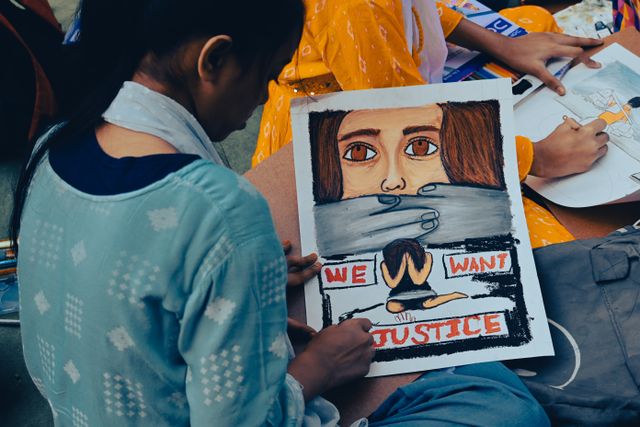
One of the most important roles of art in social justice movements is providing a platform for people whose experiences are often underrepresented in mainstream media or public discussions.
Art allows individuals and communities to share personal stories about discrimination, poverty, exclusion, displacement, and other social challenges. Through paintings, performances, films, and written works, artists can communicate emotions and experiences that statistics alone may not fully convey.
For example, an artist might create a series of portraits representing people affected by housing inequality. A filmmaker might document the experiences of families seeking access to education. A poet might explore the emotional effects of discrimination through personal narratives.
These creative works can help audiences understand social issues from perspectives they may not have encountered before.
Art can also help communities preserve cultural traditions, languages, and histories that risk being forgotten or excluded from official narratives.
Art as a Tool for Protest and Resistance
Throughout history, activists have used creative expression to challenge authority, criticize unfair systems, and make their demands visible.
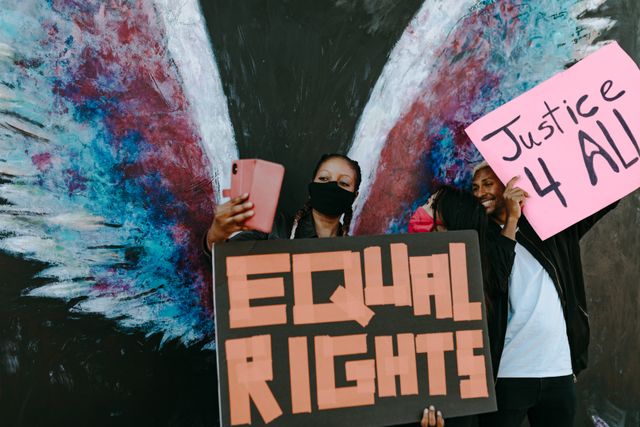
Protest art can take many forms, including posters, banners, street performances, graffiti, music, and political cartoons. Its accessibility makes it particularly useful during demonstrations and public campaigns.
The Power of Visual Symbols
A simple image or symbol can communicate a message quickly. Strong colors, recognizable shapes, and short phrases can make protest materials memorable and easy to share.
Posters and banners also allow individuals to contribute creatively to a collective movement. Even people without formal artistic training can create signs, illustrations, or messages that express their concerns.
Music and Collective Action
Music has played an important role in many movements for civil rights, labor rights, peace, and equality. Songs can communicate shared values, preserve historical memories, and help participants feel connected during demonstrations.
Singing together can create a sense of solidarity, while recorded music allows a movement's message to reach audiences beyond the location of a protest.
Art does not replace organizing, policy work, or direct action. Instead, it can complement these efforts by making a movement's goals more visible and emotionally meaningful.
Murals and Street Art: Turning Public Spaces Into Messages
Public art can transform everyday spaces into places for reflection, dialogue, and community expression. Murals, installations, and street art often make social issues visible to people who might never visit a gallery or museum.
Unlike artworks displayed in private collections, public murals can become part of a neighborhood's identity. They may commemorate historical events, honor community leaders, celebrate cultural heritage, or highlight ongoing struggles.
For example, murals associated with civil rights movements can preserve memories of local activists and important events. Community art projects can also invite residents to participate in designing images that reflect their shared experiences.
However, public art can raise questions about ownership, consent, and representation. A mural intended to support a community may cause controversy if local residents were excluded from the process or if their experiences are portrayed inaccurately.
Meaningful community involvement can help ensure that public art reflects the people and places it represents.
Photography and Film: Making Social Issues Visible
Photography and film can document events, preserve testimony, and help audiences understand the human consequences of social problems.
A photograph may capture a moment that becomes an enduring symbol of a movement. Documentary films can provide more detailed accounts of historical events, personal experiences, and the conditions that lead people to demand change.
These formats are particularly valuable because they can combine individual stories with broader social context.
Documentary Storytelling
Documentary filmmakers may explore topics such as access to education, environmental justice, working conditions, disability rights, or unequal access to healthcare. Interviews, archival footage, and firsthand accounts can help audiences understand how these issues affect everyday life.
Ethical Representation
Visual storytelling also carries responsibility. Images can be misleading when removed from context, and the publication of identifiable photographs may create privacy or safety risks for people involved in sensitive situations.
Ethical artists and journalists should consider consent, accuracy, personal dignity, and the potential consequences of sharing their work.
A powerful image can draw attention to an issue, but its impact depends partly on how responsibly it is created and presented.
Literature, Poetry, and Theater as Forms of Social Commentary
Written and performed art can explore social inequality in ways that encourage audiences to question familiar assumptions.
Novels, essays, spoken-word poetry, plays, and other literary forms allow creators to explore the experiences of individuals and communities in depth.
A novel can reveal how discrimination shapes a character's opportunities over many years. A poem can express grief, anger, hope, or resistance in a few carefully chosen lines. A theatrical performance can present competing perspectives and invite audiences to examine difficult questions.
Community theater and participatory performances can be especially valuable because they give participants opportunities to share experiences and discuss possible responses to local problems.
Literature and theater can also preserve stories that are missing from mainstream historical accounts, helping later generations understand how people experienced periods of social change.
Digital Art and Social Media Activism
Digital platforms have expanded the ways artists participate in social justice movements. Illustrations, short videos, animations, digital posters, and online exhibitions can reach audiences across geographical boundaries.
Social media makes it possible to share creative work rapidly and connect artists with activists, community organizations, and supporters.
Digital art can contribute to movements in several ways:
- Raising awareness: Illustrations and short videos can introduce audiences to an issue.
- Sharing information: Infographics can summarize research, campaign goals, or available resources.
- Building community: Artists can collaborate with people who share their concerns.
- Preserving experiences: Digital collections can document events and personal testimonies.
- Encouraging participation: Creative campaigns can invite people to contribute their own artwork or stories.
However, online visibility does not always translate into meaningful change. Content may spread without providing accurate context, and complex issues can become oversimplified into slogans or trending hashtags.
Digital artists should also consider misinformation, harassment, copyright, privacy, and the possibility that their work may be copied or shared without permission.
How Art Influences Public Awareness and Social Change
Art can influence social justice movements by shaping how people understand an issue, encouraging empathy, and creating opportunities for public discussion.
|
Role of art |
How it contributes |
Example |
|
Raising awareness |
Makes an issue easier to recognize and discuss |
A poster campaign about accessible public spaces |
|
Building solidarity |
Creates shared symbols and experiences |
Songs performed during peaceful demonstrations |
|
Preserving history |
Documents events and community memories |
A mural honoring local civil rights activists |
|
Encouraging dialogue |
Presents different experiences and perspectives |
A community theater production about discrimination |
|
Mobilizing participation |
Invites people to contribute to a cause |
A collaborative digital art campaign |
|
Challenging stereotypes |
Presents people and experiences beyond familiar assumptions |
A photography exhibition featuring underrepresented communities |
Art can help people notice problems and imagine alternatives, but it rarely works in isolation. Lasting social change often also depends on community organizing, education, legal action, public policy, and sustained participation.
The influence of an artwork may be immediate, such as attracting attention to a demonstration, or gradual, as repeated exposure changes how a community discusses a particular issue.
Challenges Faced by Artists in Social Justice Movements
Although art can support social change, artists who address controversial issues may face practical, professional, and personal challenges.
Censorship and Restrictions
Some artists encounter restrictions on where their work can be displayed or shared. Public murals may be removed, performances may be canceled, and digital content may be restricted by platforms or institutions.
The level of risk varies depending on the subject, location, and political or social environment.
Funding and Access
Artists may struggle to secure funding, materials, exhibition space, or opportunities to reach audiences. Community-led projects can be especially dependent on volunteers and donations.
Grants, local partnerships, public programs, and collaborative projects can help make socially engaged art more accessible.
Misinterpretation and Controversy
Art often encourages discussion, but audiences may interpret a work differently from its creator's intention. Some works may also oversimplify complex issues or unintentionally reinforce stereotypes.
Research, community consultation, and careful presentation can reduce these risks.
Emotional and Personal Costs
Artists who explore traumatic experiences or work closely with affected communities may face emotional strain. Public attention can also expose them to criticism or online harassment.
Supportive creative networks, clear boundaries, and responsible collaboration can help artists continue their work while protecting their well-being.
How to Use Art to Support a Social Justice Cause
You do not need to be a professional artist to contribute creatively to a cause. Individuals, schools, community groups, and nonprofit organizations can use art to communicate ideas and bring people together.
Here are several practical ways to get involved:
- Learn about the issue. Research its history, listen to affected communities, and understand the different perspectives involved.
- Choose a suitable format. Consider creating a poster, photograph series, poem, short film, mural, or digital illustration.
- Collaborate with others. Invite community members to contribute ideas and help shape the message.
- Represent people responsibly. Avoid stereotypes, respect privacy, and seek consent when sharing personal stories or identifiable images.
- Make the message accessible. Use clear language, readable designs, captions, or translations where appropriate.
- Connect art with action. Where relevant, provide information about community events, educational resources, volunteer opportunities, or established organizations.
- Reflect on the impact. Ask participants and audiences what they learned and whether the project represented the community fairly.
Creative projects are often most meaningful when they are developed with the people whose experiences they aim to represent rather than simply speaking on their behalf.
Conclusion
Art plays an important role in social justice movements by making experiences visible, communicating shared values, preserving history, and encouraging public discussion. Murals, music, photography, literature, theater, and digital media each offer different ways to explore inequality and imagine change.
At the same time, art is not a substitute for practical action. Its contribution is strongest when creative expression works alongside community participation, education, advocacy, and efforts to address the causes of injustice.
Anyone can begin exploring this connection between creativity and social change. By learning about an issue, listening to affected communities, and choosing a thoughtful way to express an idea, artists and supporters can help create spaces for understanding, dialogue, and collective action.
Frequently Asked Questions
Start by researching an issue, listening to people directly affected, and choosing a format that suits your skills. A simple poster, photograph, poem, or collaborative project can communicate a meaningful message when it is accurate, respectful, and accessible.


Was This Article Helpful?
Click on a star to rate it!
Thank you for your vote!
Average Rating: 0/5 Votes: 0
Be the first to rate this post!

Proficient background in project planning, execution, and continuous improvement. Experienced in analyzing ideas and forecasting project success, defining requirements and timelines, and managing communication across cross-functional teams. Skilled in creating and maintaining project documentation, automating processes, and making data-driven decisions in critical situations.
View LinkedIn ProfileLatest Posts

Ecology and Sustainable Development

Injury Prevention for Solo Athletes