Ecology and Sustainable Development: Building a Greener Future
Ecology and sustainable development are closely connected to the future of our planet. As populations grow, cities expand, and demand for natural resources increases, protecting the environment has become an important global priority.
Ecology helps us understand how living organisms interact with one another and with their surroundings. Sustainable development applies this understanding to decisions about how societies use resources, build communities, grow food, and develop their economies.
Together, these ideas offer a framework for meeting people's needs while protecting the natural systems that support life. From reducing waste at home to investing in renewable energy, individuals, businesses, and governments all have opportunities to contribute to a more sustainable future.
Understanding Ecology and Sustainable Development
Ecology is the study of relationships between organisms and their environment. It explores how plants, animals, microorganisms, water, soil, air, and climate interact within ecosystems.
Sustainable development focuses on improving people's quality of life while ensuring that natural resources and environmental systems remain available for future generations.
It is commonly described through three interconnected dimensions:
- Environmental sustainability: Protecting ecosystems, reducing pollution, conserving biodiversity, and using natural resources responsibly.
- Economic sustainability: Supporting economic activity and livelihoods without creating long-term environmental or financial problems.
- Social sustainability: Promoting health, education, equality, safe communities, and access to essential resources.
These dimensions influence one another. For example, clean water supports public health, agriculture, and economic activity. Healthy forests store carbon, provide habitats, protect soil, and support communities that depend on forest resources.
Sustainable development aims to consider these connections when making decisions.
Why Healthy Ecosystems Matter
Ecosystems provide essential services that support human life and economic activity. Forests, wetlands, grasslands, oceans, and other natural environments all play important roles in maintaining ecological balance.
Biodiversity and Ecosystem Stability
Biodiversity includes the variety of life within a region, from microorganisms and plants to animals and fungi. Different species contribute to processes such as pollination, nutrient cycling, decomposition, and natural pest control.
When biodiversity declines, ecosystems may become less resilient to environmental changes and other pressures.
Protecting habitats, reducing pollution, and managing natural resources responsibly can help maintain biodiversity.
Clean Air and Water
Forests, wetlands, and other ecosystems influence water cycles, help filter pollutants, and contribute to air quality. However, natural systems cannot remove every contaminant, and human communities still need effective water treatment, pollution controls, and waste management.
Protecting rivers, lakes, groundwater, and coastal environments is important for public health and for industries that depend on reliable water supplies.
Soil Health and Food Production
Healthy soil supports plant growth, stores carbon, retains water, and provides habitats for many organisms. Intensive land use, erosion, pollution, and poor agricultural practices can damage soil quality.
Practices such as crop rotation, cover cropping, reduced soil disturbance, and responsible nutrient management can help protect agricultural land.
Climate Change and the Need for Sustainable Development
Climate change is one of the major environmental challenges facing the world. Human activities, especially the burning of fossil fuels, have increased concentrations of greenhouse gases in the atmosphere, contributing to global warming.
Rising temperatures can affect ecosystems, agriculture, water availability, and human health. Climate-related risks include more intense heat, changes in rainfall patterns, rising sea levels, and increased risks from certain extreme weather events.
Sustainable development can help address these challenges through two complementary approaches.
Reducing Greenhouse Gas Emissions
Reducing emissions involves changing how energy is produced and used. Examples include:
- Expanding renewable energy such as solar and wind power.
- Improving energy efficiency in buildings and industry.
- Developing public transportation and safer walking and cycling routes.
- Reducing food loss and waste.
- Protecting and restoring forests and other carbon-rich ecosystems.
These measures can lower emissions while creating opportunities for innovation and employment.
Adapting to Environmental Changes
Some climate impacts are already occurring, making adaptation important alongside emissions reduction.
Communities can prepare by improving flood protection, developing heat-response plans, protecting water supplies, restoring wetlands, and choosing crops suited to changing conditions.
Effective adaptation depends on local risks, available resources, and the needs of vulnerable communities.
Sustainable Agriculture and Responsible Food Production
Agriculture depends directly on natural systems. Farmers need healthy soil, water, pollinators, and suitable weather conditions to produce food. At the same time, farming can contribute to environmental problems when land and resources are poorly managed.
Sustainable agriculture aims to produce food while protecting the resources needed for future harvests.
Common approaches include:
- Crop rotation: Growing different crops in sequence to improve soil management and help interrupt some pest and disease cycles.
- Efficient irrigation: Using methods such as drip irrigation where suitable to reduce unnecessary water use.
- Integrated pest management: Combining monitoring, prevention, biological controls, and carefully targeted pesticides when necessary.
- Soil conservation: Using cover crops, windbreaks, and other practices to reduce erosion.
- Agroforestry: Integrating trees with crops or livestock systems where appropriate.
- Responsible fertilizer use: Matching nutrient applications to crop needs to reduce waste and water pollution.
No single farming method is ideal for every environment. Sustainable practices must account for local climate, soil, crop types, farm economics, and community needs.
Consumers can also contribute by planning meals, storing food properly, using leftovers, and choosing seasonal products when practical.
Renewable Energy and Green Technology
Energy production is a major part of sustainable development because it affects greenhouse gas emissions, air pollution, infrastructure, and household costs.
Renewable energy technologies use sources that are naturally replenished, such as sunlight, wind, flowing water, and geothermal heat.
Solar and Wind Power
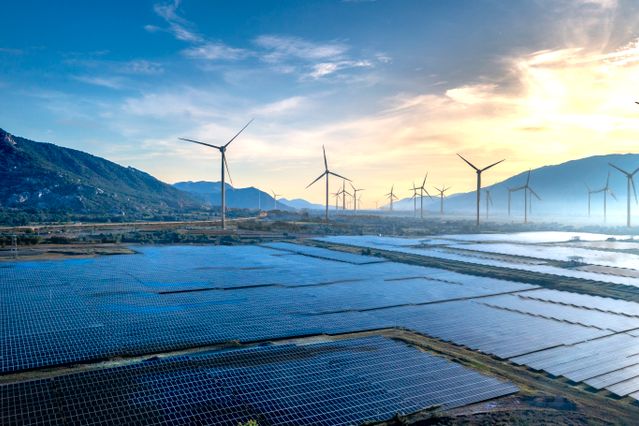
Solar panels convert sunlight into electricity, while wind turbines use moving air to generate power. Both can reduce dependence on fossil fuels when integrated effectively into the electricity system.
Their output varies with weather and time of day, so reliable energy systems may also require storage, transmission improvements, flexible demand, and other power sources.
Energy-Efficient Buildings
Buildings can consume significant amounts of energy for heating, cooling, lighting, and appliances. Insulation, efficient windows, heat pumps, and energy-saving lighting can reduce consumption and improve comfort.
Sustainable Transportation
Public transport, electric vehicles, walking, cycling, and better urban planning can help reduce transport emissions. The most suitable combination depends on local infrastructure, travel distances, electricity sources, and community needs.
Green technology can support environmental goals, but its benefits depend on responsible manufacturing, resource use, maintenance, and end-of-life recycling.
Waste Reduction and the Circular Economy
Traditional production systems often follow a linear pattern: extract resources, manufacture products, use them, and discard them. This approach can create large amounts of waste and increase pressure on natural resources.
A circular economy aims to keep products and materials in use for longer through better design, repair, reuse, remanufacturing, and recycling.
The Waste Hierarchy
The most effective waste strategies generally prioritize preventing waste before dealing with discarded materials.
|
Approach |
What it means |
Everyday example |
|
Refuse and reduce |
Avoid unnecessary consumption and packaging |
Carrying a reusable shopping bag |
|
Reuse |
Use an item more than once |
Refilling a suitable water bottle |
|
Repair |
Extend a product's useful life |
Fixing a damaged appliance |
|
Recycle |
Process suitable materials into new products |
Recycling clean paper and metal |
|
Compost |
Turn suitable organic waste into a useful soil amendment |
Composting fruit and vegetable scraps |
Recycling is valuable, but it is not always possible or equally effective for every material. Local collection rules matter, and reducing unnecessary consumption can prevent waste before it is created.
Businesses can support circular practices by designing durable products, offering repair services, reducing packaging, and creating systems for collecting and reusing materials.
Sustainable Cities and Communities
Cities provide housing, jobs, education, transportation, and essential services, but they also concentrate energy use, traffic, waste, and environmental pressures.
Sustainable urban development seeks to make communities healthier, more efficient, and more resilient.
Important features of sustainable cities include:
- Reliable public transportation and safe pedestrian routes.
- Green spaces, urban forests, and accessible parks.
- Energy-efficient buildings.
- Effective recycling and wastewater systems.
- Affordable housing close to essential services.
- Infrastructure designed for heat, flooding, and other environmental risks.
Urban trees can provide shade and help reduce local heat exposure. Parks and green corridors can also create habitats for wildlife and improve access to outdoor recreation.
However, urban sustainability requires careful planning. Green improvements should be accessible to different income groups and should not push existing residents out of their neighborhoods through rising costs.
What Individuals Can Do to Support Sustainable Development
Environmental challenges require action from governments and industries, but individual choices can also contribute to broader change.
Small habits are most useful when they are practical, consistent, and supported by systems that make sustainable options accessible.
At Home
- Turn off lights and appliances when they are not needed.
- Improve insulation and use energy-efficient equipment where possible.
- Repair products before replacing them.
- Reduce unnecessary packaging and single-use items.
- Separate recyclable materials according to local rules.
- Compost suitable food scraps when practical.
When Shopping and Eating
- Plan meals to reduce food waste.
- Buy only what you expect to use.
- Choose durable, repairable products when possible.
- Consider seasonal foods available in your region.
- Reduce food waste by storing ingredients correctly and using leftovers.
In Your Community
- Use public transportation, walk, or cycle when practical.
- Participate in local cleanup or habitat restoration projects.
- Support community gardens and environmental education.
- Encourage responsible waste management and accessible green spaces.
- Learn about local environmental issues and participate in community discussions.
Individual actions are not a substitute for larger structural changes. Effective environmental policies, responsible business practices, and investment in sustainable infrastructure are also essential.
The Future of Ecology and Sustainable Development
The future of sustainable development will depend on how societies respond to environmental pressures while improving people's quality of life.
Several areas will remain important:
Biodiversity conservation: Protecting habitats, restoring damaged ecosystems, and reducing pressures on threatened species.
Clean energy transitions: Expanding low-emission energy while improving energy access, affordability, and reliability.
Sustainable food systems: Protecting soil and water, reducing food waste, and supporting resilient agricultural practices.
Environmental education: Helping people understand ecological processes and make informed decisions.
International cooperation: Addressing challenges such as climate change, ocean pollution, and biodiversity loss that cross national borders.
The United Nations Sustainable Development Goals provide a shared framework for addressing environmental, social, and economic challenges. Goals related to clean water, clean energy, sustainable cities, responsible consumption, climate action, and life on land and below water are closely connected.
Progress requires cooperation between governments, scientists, businesses, communities, and individuals. It also requires recognizing that environmental solutions must account for different local conditions and unequal access to resources.
Conclusion
Ecology and sustainable development are essential to understanding how human activities affect the natural world and how societies can meet their needs without undermining the systems that support life.
Protecting biodiversity, reducing pollution, conserving water, developing cleaner energy, and using resources responsibly can help create healthier and more resilient communities. These efforts work best when individual choices are supported by effective policies, responsible industries, and accessible infrastructure.
A sustainable future does not mean abandoning progress or modern conveniences. It means finding better ways to produce, consume, build, and live while considering the needs of future generations.
Frequently Asked Questions
A circular economy is an approach to production and consumption that aims to reduce waste and keep products and materials in use for longer through durable design, repair, reuse, remanufacturing, and recycling.


Was This Article Helpful?
Click on a star to rate it!
Thank you for your vote!
Average Rating: 5/5 Votes: 1
Be the first to rate this post!

Strong engineering background in mobile and backend development. Focusing on building scalable products, improving development processes — from architecture and APIs to UX redesigns, monetization, and analytics. Responsible for applications with 1M+ downloads and multi-project ecosystems.
View LinkedIn ProfileLatest Posts
Ecology and Sustainable Development

Injury Prevention for Solo Athletes