Climate Science Breakthroughs
Climate science is advancing our understanding of how the planet works, why global temperatures are rising, and what can be done to reduce climate risks. New research, satellite observations, computer models, and improved measurement techniques are helping scientists study changes in the atmosphere, oceans, ice sheets, and ecosystems with greater precision.
These breakthroughs are not limited to discovering new environmental problems. They also help researchers predict extreme weather, identify the causes of climate-related events, and evaluate potential solutions.
From artificial intelligence to advances in carbon removal, the latest developments are changing how scientists study climate change and how communities prepare for its effects.
Artificial Intelligence Improves Climate Predictions
Artificial intelligence (AI) is becoming a valuable tool in climate research. Machine learning systems can analyze large datasets, identify patterns, and support weather forecasting and climate modeling.
Traditional climate models rely on complex physical equations and powerful computers. AI can complement these models by processing observations from satellites, weather stations, and ocean monitoring systems. In some applications, AI-based forecasting systems can generate predictions more quickly than conventional approaches.
These tools can support earlier warnings of heatwaves, storms, floods, and other dangerous conditions. They can also help researchers investigate relationships between different climate variables.
However, AI does not replace established climate science. Its predictions depend on the quality of the data and the conditions represented in its training. Researchers still need physical models, observations, and independent testing to evaluate reliability.
Scientists Are Learning More About Ocean Warming
The oceans absorb most of the excess heat trapped by greenhouse gases, making them essential to understanding global warming. New measurements and improved ocean monitoring systems help scientists track changes in water temperature, circulation, and marine ecosystems.
The findings are increasingly important. According to the World Meteorological Organization, ocean heat content reached a record high in 2025, while the rate of ocean warming over 2005–2025 was more than twice that observed over 1960–2005.
Researchers are also studying marine heatwaves, which can stress coral reefs, disrupt fisheries, and affect marine biodiversity.
Better ocean observations help scientists understand how heat moves through the climate system and how warming oceans contribute to sea-level rise. They also improve assessments of risks to coastal communities and marine industries.
Climate Attribution Connects Extreme Weather to Global Warming
One important advance in climate science is the growing ability to estimate how human-caused climate change affects individual extreme weather events.
This field, known as extreme event attribution, combines observational records, climate models, and statistical analysis. Scientists compare the likelihood or intensity of an event in the current climate with estimates for a world without human-caused warming.
For example, an attribution study may find that climate change made a particular heatwave more likely or more intense. Researchers can also investigate how warming influences heavy rainfall, drought, and wildfire conditions.
This does not mean climate change is the sole cause of every disaster. Local weather patterns, land use, infrastructure, and other factors also influence the impacts of extreme events.
More precise attribution can nevertheless help governments and communities understand risks and improve preparedness.
Satellite Technology Provides a Clearer View of Earth
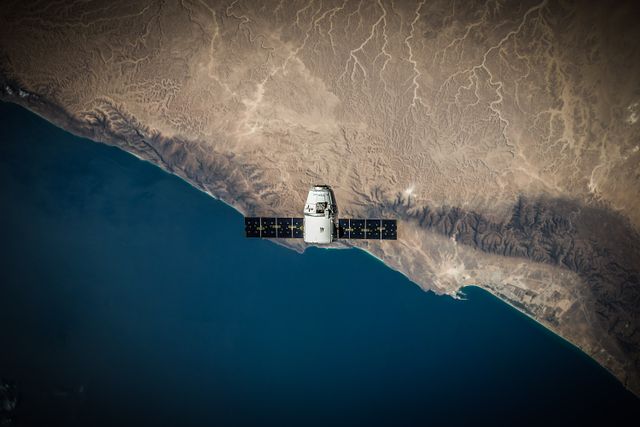
Satellites have transformed climate research by allowing scientists to observe large areas of the planet consistently over time.
Modern instruments measure changes in sea level, ice coverage, land temperatures, atmospheric composition, vegetation, and other climate indicators. These observations help researchers monitor regions that are difficult to access using ground-based equipment alone.
Satellite measurements are particularly valuable for tracking glaciers and polar ice sheets, detecting changes in forests, and observing greenhouse gases in the atmosphere.
Combining satellite data with measurements from ships, weather stations, and ground sensors creates a more complete picture of Earth's changing climate.
These observations also help researchers check whether climate models accurately represent real-world conditions and where further improvements are needed.
Research Reveals Growing Pressure on Natural Carbon Sinks
Forests, soils, wetlands, and oceans absorb carbon dioxide and help regulate the climate. These natural carbon sinks play an important role in limiting the amount of carbon dioxide that remains in the atmosphere.
However, their ability to absorb carbon is not unlimited. Drought, wildfires, rising temperatures, deforestation, and ecosystem degradation can weaken their capacity to store carbon.
Recent climate research has highlighted concerns about pressure on land-based carbon sinks, particularly in northern regions. Scientists are investigating how changes in vegetation, soil moisture, and disturbances such as wildfires affect the amount of carbon absorbed and released by ecosystems.
This research reinforces the importance of protecting forests and restoring degraded ecosystems. It also shows why climate strategies cannot assume that natural systems will continue absorbing carbon at the same rate indefinitely.
Carbon Removal Technologies Are Advancing
Reducing greenhouse gas emissions remains essential, but some emissions are difficult to eliminate completely. Scientists are therefore investigating methods for removing carbon dioxide from the atmosphere and storing it for long periods.
Approaches include direct air capture, enhanced mineral weathering, and certain forms of biomass-based carbon removal with carbon storage. Each method has different costs, energy requirements, environmental impacts, and storage limitations.
Direct air capture, for example, uses specialized systems to extract carbon dioxide from ambient air. The captured gas must then be stored securely or used in a way that prevents its rapid return to the atmosphere.
Research is increasingly focused on how carbon removal can be expanded responsibly, how much carbon different methods can genuinely remove, and how to verify their results.
These technologies may complement emissions reductions, but they are not a substitute for cutting fossil fuel use. Their long-term value depends on measurable climate benefits, reliable storage, and careful environmental assessment.
Climate Models Are Becoming More Detailed
Climate models simulate interactions between the atmosphere, oceans, land, ice, and living systems. They help researchers explore how the climate might respond to different levels of greenhouse gas emissions.
Improvements in computing power, observations, and model design allow scientists to study climate processes in greater detail. Researchers can investigate regional rainfall patterns, extreme temperatures, ocean circulation, and potential changes in ecosystems.
High-resolution models can provide useful information for local planning, such as assessing flood risks or evaluating how heat may affect cities. However, regional projections can still contain substantial uncertainty, especially for rainfall and localized extreme events.
Scientists address this uncertainty by comparing multiple models, evaluating historical performance, and examining a range of possible future emissions scenarios.
Major Climate Science Breakthroughs at a Glance
|
Breakthrough |
What It Helps Scientists Understand |
Practical Value |
|
AI-assisted forecasting |
Weather patterns and complex climate data |
Faster forecasts and potential early warnings |
|
Ocean monitoring |
Heat storage and marine heatwaves |
Better coastal and marine risk assessments |
|
Extreme event attribution |
The influence of global warming on specific events |
More informed disaster planning |
|
Satellite observations |
Changes in ice, forests, sea levels, and greenhouse gases |
Broader and more consistent monitoring |
|
Carbon sink research |
How ecosystems absorb and release carbon |
Better forest and land management |
|
Carbon removal research |
Methods for removing atmospheric carbon dioxide |
Evaluation of additional climate solutions |
|
Improved climate models |
Possible future climate conditions |
Stronger long-term planning |
Climate Science Is Improving Public Health Planning
Climate change affects human health through heat exposure, air quality, changing disease patterns, food security, and extreme weather.
Researchers are increasingly combining climate data with health records, population information, and environmental measurements to understand these connections.
For example, scientists can assess how rising temperatures affect heat-related illness or investigate how changing rainfall and temperature patterns influence the geographic suitability of certain mosquito-borne diseases.
Research synthesized in the 2025 climate science review also highlights growing climate-related risks involving dengue transmission, income, and labor productivity.
These findings can help public health authorities prepare heat action plans, improve disease surveillance, and direct resources toward vulnerable populations.
The benefits extend beyond hospitals. Urban planners, employers, schools, and emergency services can use climate information to reduce exposure to dangerous conditions.
Challenges That Climate Science Still Needs to Address
Despite major advances, scientists continue to face important challenges. Some regions have limited observational data, particularly where monitoring infrastructure is expensive or difficult to maintain. Long-term projections also remain uncertain because future outcomes depend partly on human decisions about emissions, land use, and energy.
Another challenge is translating scientific findings into practical action. A more accurate forecast has limited value if communities do not receive warnings or lack the resources to respond.
Climate research therefore depends on international cooperation, sustained funding, open data, and effective communication between scientists, policymakers, businesses, and the public.
It is also important to distinguish between promising early-stage technologies and solutions that have already demonstrated reliable results at scale.
Conclusion
Climate science breakthroughs are providing a clearer picture of how Earth's climate is changing and what those changes mean for people and ecosystems. AI-assisted forecasting, satellite monitoring, extreme event attribution, improved climate models, and carbon removal research are expanding the tools available to scientists and decision-makers.
Yet better knowledge alone cannot stop global warming. The greatest benefits will come when scientific evidence informs practical decisions, from reducing greenhouse gas emissions and protecting natural ecosystems to improving infrastructure and preparing for extreme weather.
Continued research will be essential, but its impact will ultimately depend on how effectively society uses what scientists discover.
Frequently Asked Questions
Climate science supports decisions about public health, agriculture, water supplies, energy systems, buildings, and emergency planning. Its findings can help communities prepare for heatwaves, floods, droughts, and other climate-related risks.


Was This Article Helpful?
Click on a star to rate it!
Thank you for your vote!
Average Rating: 5/5 Votes: 1
Be the first to rate this post!

Tech entrepreneur & digital strategist with over 9 years of experience in backend development and more than 5 years in executive leadership. Education Software and Web developer. More than 20 years of experience in software and web development.
View LinkedIn ProfileLatest Posts

Exploring Global Cooking Traditions

Seasonal Recipes Using Fresh Ingredients

Long-Distance Relationship Strategies