IT Infrastructure for Modern Enterprises
Modern businesses depend on technology for almost everything: communication, data storage, customer service, collaboration, payments, and daily operations.
Behind all of these systems is IT infrastructure—the combination of hardware, software, networks, cloud services, and security tools that keeps an organization running.
A strong infrastructure doesn't just support today's operations. It should also give a business enough flexibility to grow and adapt.
What Is Enterprise IT Infrastructure?
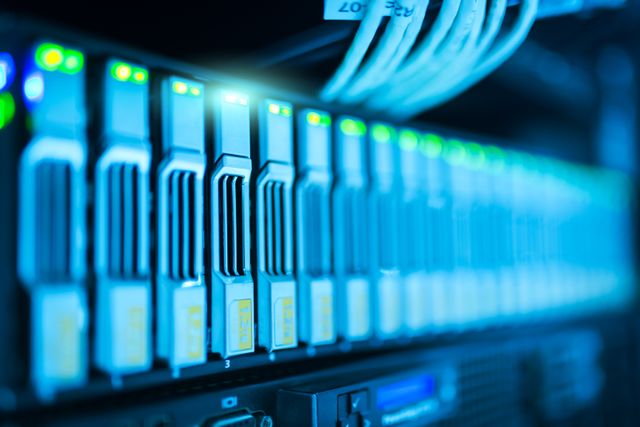
Enterprise IT infrastructure is the foundation that connects an organization's technology systems.
It can include:
- Servers and data storage
- Network equipment
- Cloud platforms
- Business applications
- Databases
- Cybersecurity tools
- Employee devices
- Backup and recovery systems
Think of it as the digital plumbing of a company. Employees may not notice it when everything works, but problems become obvious when something breaks.
Cloud Infrastructure Has Become Central
Many organizations use cloud services instead of relying entirely on physical servers in their own facilities.
Cloud infrastructure can provide access to computing resources, storage, databases, and applications without requiring a company to purchase and maintain all the underlying hardware itself.
Organizations may use public clouds, private clouds, or hybrid environments depending on their requirements.
Cloud systems can also make it easier to scale resources when workloads change.
Reliable Networks Connect Everything
A modern enterprise needs dependable connectivity.
Employees may work from offices, homes, branches, or while traveling. Customers may interact with services through websites and mobile applications. Internal systems may need to communicate across multiple locations.
Network infrastructure can include:
- Routers and switches
- Wireless networks
- Firewalls
- VPNs
- Internet connections
- Network monitoring tools
Performance and reliability matter because even a powerful application is not very useful if users cannot connect to it.
Data Storage and Management
Businesses generate large amounts of data through transactions, customer interactions, applications, documents, and internal processes.
IT infrastructure needs to provide reliable ways to store, organize, protect, and retrieve that information.
|
Infrastructure Component |
Main Purpose |
Key Consideration |
|
Cloud services |
Computing and storage |
Scalability |
|
Networks |
Connect systems and users |
Reliability |
|
Servers |
Run applications and services |
Performance |
|
Databases |
Store structured information |
Availability |
|
Security tools |
Protect systems and data |
Risk management |
|
Backup systems |
Recover information |
Resilience |
Data management should also account for access controls, retention requirements, backup procedures, and applicable regulations.
Cybersecurity Is Part of the Foundation
Security should not be treated as an extra layer added after infrastructure is built.
Modern enterprises face risks such as phishing, malware, unauthorized access, data theft, and system disruption.
A broader security strategy may include:
- Multi-factor authentication
- Endpoint protection
- Network security
- Encryption
- Access management
- Security monitoring
- Employee awareness training
- Incident response plans
The exact controls required depend on the organization's systems, industry, risk profile, and regulatory environment.
Backup and Disaster Recovery
Even well-designed infrastructure can experience failures.
Hardware can break. Software can malfunction. Human mistakes can delete information. Cyber incidents can disrupt operations.
Backups provide copies of important data, while disaster recovery focuses on restoring systems and operations after a major disruption.
Businesses should know not only whether backups exist, but also whether they can actually be restored when needed.
Regular testing is essential.
Monitoring and Automation
As infrastructure becomes more complex, manually checking every system becomes difficult.
Monitoring tools can help IT teams track performance, availability, capacity, and potential problems.
Automation can also reduce repetitive work. For example, organizations may automate software deployment, backups, system updates, or routine infrastructure tasks.
The goal is not to automate everything. It is to reduce unnecessary manual work while maintaining appropriate control.
Scalability and Future Growth
Infrastructure should support the company's current needs without making future expansion unnecessarily difficult.
A growing organization may need more users, applications, storage, computing power, locations, or security controls.
Scalable infrastructure allows these resources to expand without requiring a complete redesign every time the business grows.
Managing Costs and Complexity
More technology does not automatically mean better infrastructure.
Every additional platform, application, integration, or service can create maintenance requirements and potential points of failure.
Businesses should regularly evaluate which systems they actually need, how they are being used, and whether overlapping tools can be consolidated.
Good infrastructure balances performance, reliability, security, scalability, and cost.

Conclusion
IT infrastructure is the foundation behind modern enterprise operations. Cloud services, networks, storage, cybersecurity, backups, monitoring, and automation all play important roles in keeping businesses productive and resilient.
The right infrastructure is not necessarily the most complicated one. It is the one that reliably supports business objectives today while leaving enough flexibility for tomorrow.
Frequently Asked Questions
Organizations can use scalable cloud resources, modular systems, automation, capacity planning, and flexible network and storage architectures to accommodate future growth.


Was This Article Helpful?
Click on a star to rate it!
Thank you for your vote!

Average Rating: 0/5 Votes: 0
Be the first to rate this post!

Tech entrepreneur & digital strategist with over 9 years of experience in backend development and more than 5 years in executive leadership. Education Software and Web developer. More than 20 years of experience in software and web development.
View LinkedIn ProfileLatest Posts

Gaming Gadgets for Enthusiasts

Disruptive Technologies Reshaping Markets
The Rise of Software-Defined Cars