The Rise of Software-Defined Cars
Cars were once defined mainly by their mechanical components. Engines, transmissions, suspension systems, and physical controls determined what a vehicle could do.
Today, software is becoming just as important.
Modern vehicles can contain dozens of electronic control units, cameras, sensors, connectivity systems, and millions of lines of code. This shift has given rise to software-defined cars—vehicles where software plays a central role in controlling functions, delivering features, and improving the driving experience.
What Is a Software-Defined Car?
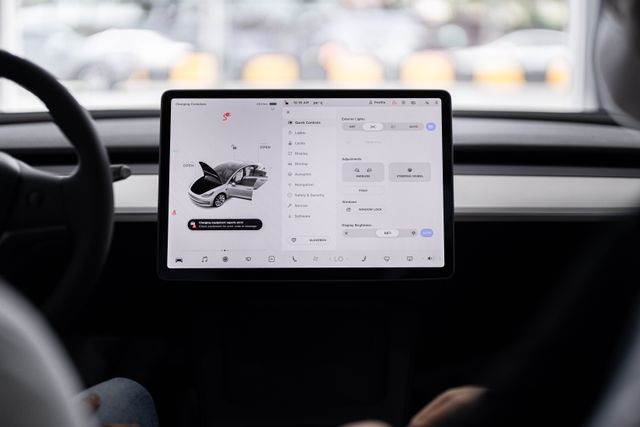
A software-defined car is a vehicle whose functionality can be significantly controlled, updated, or expanded through software.
Instead of every capability being permanently determined when a car leaves the factory, manufacturers can increasingly modify certain features through software updates.
This can affect everything from infotainment and navigation to driver-assistance systems, battery management, and vehicle settings.
Software Is Becoming a Core Vehicle Component
Traditional automotive development focused heavily on mechanical engineering. Software was important, but often supported individual vehicle systems.
The software-defined approach brings these systems closer together.
A modern vehicle may use software to coordinate:
- Driver assistance
- Infotainment
- Navigation
- Battery management
- Climate control
- Vehicle diagnostics
- Connectivity
- Digital instrument displays
This creates a more integrated technology platform inside the car.
Over-the-Air Updates Change the Ownership Experience
One of the most visible advantages of software-defined vehicles is the ability to deliver over-the-air (OTA) updates.
Instead of requiring a service visit for every software improvement, compatible vehicles can receive some updates remotely.
These updates may fix bugs, improve performance, introduce new functionality, or update existing systems.
|
Traditional Vehicle Model |
Software-Defined Vehicle |
|
Many features fixed at production |
Some features can evolve after production |
|
Updates often require service visits |
Some updates can happen remotely |
|
Hardware-centered development |
Software and hardware developed together |
|
Diagnostics can be more manual |
Connected diagnostics can provide more data |
|
Product changes tied closely to new models |
Some improvements can reach existing vehicles |
However, OTA updates also require strong cybersecurity, reliable connectivity, testing, and safeguards against failed installations.
Connected Cars Generate More Data
Software-defined vehicles are increasingly connected to external services.
A vehicle can collect information from sensors and systems while communicating with cloud platforms, mobile applications, navigation services, and manufacturer systems.
This connectivity can support features such as remote vehicle controls, real-time diagnostics, traffic information, maintenance notifications, and personalized services.
At the same time, more connected systems create questions about data protection, access controls, and how vehicle information is collected and used.
Advanced Driver Assistance Depends on Software
Many modern driver-assistance features rely heavily on software.
Cameras, radar, lidar in some systems, and other sensors generate information that software processes to identify objects, road conditions, lane markings, and other relevant details.
Software can then help provide functions such as:
- Adaptive cruise control
- Lane-centering assistance
- Automatic emergency braking
- Parking assistance
- Traffic-sign recognition
These systems can be sophisticated, but they do not eliminate the need for appropriate driver attention and safe vehicle operation.
Electric Vehicles Strengthen the Software Shift
Electric vehicles have also accelerated software's role in automotive technology.
Software can manage battery charging, energy consumption, thermal conditions, and power delivery.
For example, battery-management systems monitor individual battery characteristics and help maintain operating conditions.
Manufacturers can also use software improvements to optimize energy efficiency or charging behavior without necessarily changing the physical battery pack.
New Business Models Are Emerging
Software-defined vehicles can change how manufacturers deliver and monetize features.
Instead of selling a vehicle with one fixed set of capabilities, manufacturers may offer optional digital functions, connected services, or feature packages.
This can create new revenue opportunities throughout the vehicle's lifecycle.
However, customer expectations matter. Drivers may be more accepting of paid digital services when they understand what they are receiving and why the feature requires an additional payment.
Cybersecurity Becomes Essential
A highly connected vehicle has a larger digital attack surface than a traditional vehicle.
Manufacturers need to protect communication systems, vehicle software, connected services, and sensitive data.
Security measures can include secure software development, access controls, encryption, monitoring, vulnerability management, and regular updates.
Cybersecurity is therefore becoming a fundamental part of automotive engineering rather than a separate IT concern.
What Comes Next?
The software-defined vehicle is still evolving.
Future cars may become increasingly connected to cloud services, smartphones, charging networks, smart infrastructure, and other vehicles. Software architectures may also become more centralized, reducing the number of separate computing units needed for different functions.
The biggest change may be the idea that a car is no longer a completely finished product when it leaves the factory.
Instead, it can become a platform that continues to receive improvements throughout its useful life.

Conclusion
Software-defined cars represent a major shift in automotive technology. Software now influences vehicle functionality, connectivity, driver assistance, energy management, diagnostics, and even how manufacturers deliver new features.
The transition also brings new responsibilities around cybersecurity, privacy, reliability, and software testing.
As vehicles become more digital, automotive innovation will increasingly depend on the interaction between mechanical engineering, electronics, software, and connected services.
Frequently Asked Questions
No. Mechanical, electrical, and software engineering all remain important. Software-defined vehicles bring these areas together into a more integrated development model.


Was This Article Helpful?
Click on a star to rate it!
Thank you for your vote!

Average Rating: 0/5 Votes: 0
Be the first to rate this post!

Expert in backend development and database architecture. Specializes in building, optimizing, and maintaining scalable PHP applications, designing efficient database structures, and ensuring data integrity and performance. Experienced in working with relational databases, writing optimized queries, and integrating backend systems with APIs and business logic to support reliable, high-performance web solutions.
View LinkedIn ProfileLatest Posts

Gaming Gadgets for Enthusiasts

Disruptive Technologies Reshaping Markets
The Rise of Software-Defined Cars