Automotive AI Applications: How Artificial Intelligence Is Transforming the Industry
Artificial intelligence (AI) is changing how vehicles are designed, manufactured, operated, and maintained. Automakers are using AI to improve driver assistance, predict mechanical problems, optimize factory operations, and create more personalized driving experiences.
These applications extend beyond self-driving cars. AI can analyze vehicle sensor data, identify defects on production lines, help manage electric vehicle batteries, and support decisions throughout the automotive supply chain. The International Energy Agency identifies automated driving, vehicle control, and AI-assisted design and optimization among the areas benefiting from recent advances in AI and computing power.
As the industry becomes increasingly software-driven, AI is emerging as an important tool for improving efficiency, reliability, and customer experience.
Advanced Driver-Assistance Systems
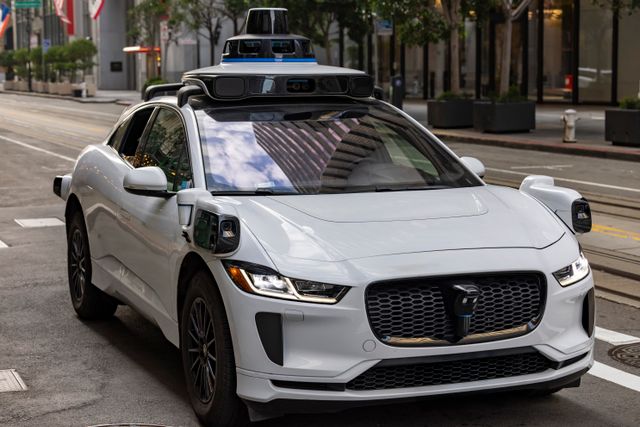
One of the most visible automotive AI applications is in advanced driver-assistance systems (ADAS). These technologies use cameras, radar, sensors, and computer vision to help vehicles recognize their surroundings and respond to potential hazards.
Common applications include:
- Automatic emergency braking: Helps detect potential collisions and may apply the brakes when necessary.
- Lane departure warnings: Alerts drivers when a vehicle begins to leave its lane unintentionally.
- Adaptive cruise control: Adjusts speed to maintain a selected following distance.
- Driver monitoring: Uses cameras or other sensors to identify signs of inattention or drowsiness.
- Traffic sign recognition: Identifies certain road signs and displays relevant information to the driver.
These systems can support safer driving by helping drivers recognize hazards and react in time. However, their capabilities vary by vehicle and operating conditions.
Many driver-assistance systems require drivers to remain attentive and responsible for driving. AI assistance should not be confused with fully autonomous driving.
Autonomous Driving
Autonomous driving is one of the most complex applications of AI in the automotive industry. Self-driving systems combine data from cameras, radar, lidar, and other sensors to interpret the road environment and plan vehicle movements.
AI models help identify pedestrians, cyclists, vehicles, traffic signals, road markings, and potential obstacles. Planning systems then determine how the vehicle should respond to changing conditions.
Autonomous driving technology is being developed for several applications:
- Robotaxi services operating in designated areas.
- Autonomous shuttles on controlled or mapped routes.
- Automated driving functions on certain highways.
- Driverless systems for selected industrial and logistics environments.
Progress depends on more than recognizing objects. Vehicles must also respond reliably to unusual situations, construction zones, unpredictable road users, and changing weather.
The level of automation matters, too. Some systems assist a human driver, while higher levels of automation can perform driving tasks within defined operating conditions. Fully autonomous driving in every environment remains a much more demanding goal.
Predictive Maintenance and Vehicle Diagnostics
AI can help identify potential mechanical problems before they lead to unexpected breakdowns. This approach, known as predictive maintenance, uses data from sensors, vehicle diagnostics, and maintenance records to identify patterns associated with faults.
For example, an AI system may analyze engine temperature, vibration, battery performance, or unusual operating patterns. If the data indicates a possible problem, the system can flag the vehicle for inspection.
Predictive maintenance is useful for both individual vehicles and commercial fleets. Fleet operators can use it to schedule servicing, reduce unplanned downtime, and prioritize vehicles that need attention.
AI-supported diagnostics can also help technicians narrow down possible causes of a fault. However, predictions are not guarantees: vehicles still need appropriate inspections, and diagnostic recommendations should be verified.
AI in Automotive Manufacturing
AI is transforming factory operations by helping manufacturers improve quality, optimize production, and identify inefficiencies.
Computer vision systems can inspect vehicle components for scratches, cracks, incorrect assembly, and other visible defects. Unlike manual inspection alone, automated systems can analyze large numbers of images consistently, although their effectiveness depends on training data and inspection conditions.
Other manufacturing applications include:
- Predicting when industrial equipment may require maintenance.
- Adjusting production schedules based on changing conditions.
- Detecting anomalies in assembly processes.
- Optimizing the use of materials and energy.
- Supporting robotics and automated quality checks.
For example, a manufacturer could use AI to detect a recurring defect in a production line and investigate which machines or process conditions are associated with it.
These applications can reduce waste and improve consistency, but they require reliable data, integration with factory systems, and ongoing performance monitoring.
Electric Vehicle Battery Management
Electric vehicles (EVs) rely on battery systems that must operate within appropriate temperature, voltage, and charging limits. AI can help analyze battery data to improve energy management and identify unusual behavior.
Potential applications include estimating battery state of charge, predicting battery health, optimizing thermal management, and adapting energy use to driving conditions.
For example, an intelligent battery management system may use information about temperature, usage patterns, and charging history to improve estimates of the battery's remaining capacity.
AI can also support charging optimization by helping vehicles or fleet operators plan when and where to charge, depending on available infrastructure, energy prices, and operational needs.
These applications are relevant to electric and hybrid vehicles, although the precise capabilities depend on the vehicle's hardware and software. AI can support battery management, but it does not eliminate battery degradation or the need for safe charging practices.
Personalized In-Car Experiences
Modern vehicles increasingly use software to provide personalized services and make in-car interactions more convenient.
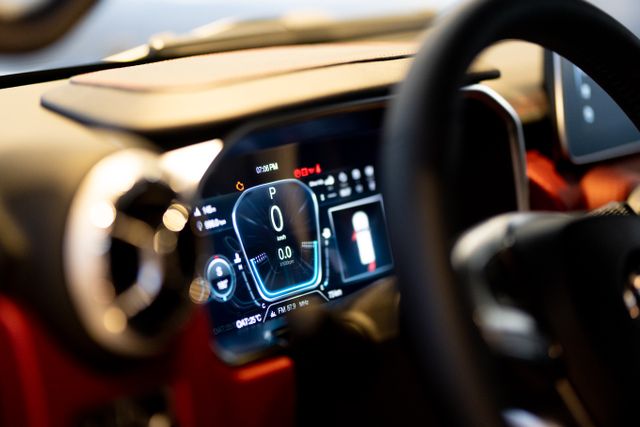
AI-powered voice assistants can interpret spoken commands, help drivers find information, control supported vehicle functions, and interact with navigation or entertainment systems. Depending on the system, AI may also learn user preferences for climate settings, frequently used destinations, or media choices.
Generative AI is expanding the possibilities for conversational interfaces. Instead of relying only on fixed commands, drivers may be able to ask more natural questions or request help with several related tasks.
However, in-car AI must be designed with driver attention in mind. Long conversations, complex visual displays, and unnecessary notifications can become distractions. Privacy is also important when systems process voice recordings, location data, or personal preferences.
The most useful systems make common tasks simpler without taking attention away from driving.
AI in Navigation and Traffic Management
Navigation systems use AI and machine learning to interpret traffic information, estimate journey times, and recommend routes.
By analyzing historical traffic patterns alongside current information, these systems can identify congestion, estimate delays, and suggest alternative routes. Some platforms can also account for road closures, weather conditions, and other disruptions when relevant data is available.
AI can also support traffic management at a city level. Systems may analyze traffic flows to help adjust signal timing, identify recurring congestion points, and improve transportation planning.
For delivery companies and fleet operators, route optimization can reduce unnecessary mileage, fuel consumption, and operating costs.
Results depend on the accuracy and availability of traffic data. A suggested route may still be affected by unexpected incidents, changing road conditions, or limitations in the underlying system.
AI in Automotive Design and Engineering
AI can help automotive engineers explore design options, simulate performance, and identify potential problems earlier in development.
Generative design tools can propose alternative component shapes or layouts based on constraints such as weight, strength, cost, and material use. Machine learning can also help analyze simulation results and prioritize designs for further testing.
In vehicle development, AI can support:
- Aerodynamic and structural design exploration.
- Analysis of engineering simulations.
- Software testing and debugging.
- Evaluation of materials and components.
- Development of vehicle control systems.
For example, engineers designing a lightweight component may use AI to generate several possible designs that meet specified strength requirements. They can then evaluate the most promising options through engineering analysis and physical testing.
AI can accelerate parts of the development process, but it does not remove the need for validation, safety testing, or professional engineering judgment.
Automotive AI Applications at a Glance
|
Application |
How AI Is Used |
Main Benefit |
|
Driver assistance |
Detects hazards and interprets road conditions |
Additional driving support |
|
Autonomous driving |
Processes sensor data and plans vehicle movements |
Automated driving within defined conditions |
|
Predictive maintenance |
Identifies patterns associated with faults |
Reduced unplanned downtime |
|
Manufacturing |
Detects defects and analyzes production data |
Improved quality and efficiency |
|
EV battery management |
Estimates battery condition and optimizes energy use |
Better energy management |
|
In-car assistants |
Interprets voice commands and user requests |
More convenient interactions |
|
Navigation |
Analyzes traffic and recommends routes |
More efficient journeys |
|
Vehicle engineering |
Supports design exploration and simulation |
Faster development and testing |
Challenges of Using AI in the Automotive Industry
Despite its potential, automotive AI introduces technical, operational, and ethical challenges.
Safety and reliability: AI systems must perform consistently in difficult conditions. A system that works well in ordinary circumstances may still struggle with unusual road layouts, poor visibility, or unexpected behavior from other road users.
Data privacy and cybersecurity: Connected vehicles can collect sensitive information about location, driving behavior, and user preferences. Manufacturers need appropriate security measures and clear rules for collecting, using, and retaining data.
Development costs: Advanced sensors, computing hardware, software development, testing, and maintenance can require substantial investment.
Integration with existing systems: Automotive companies often operate complex networks of software, equipment, suppliers, and production processes. Connecting AI to these systems can be challenging.
Regulation and accountability: Manufacturers must consider applicable safety requirements and determine how to investigate failures or assign responsibility when AI-enabled systems behave incorrectly.
Addressing these challenges requires rigorous testing, ongoing monitoring, human oversight where appropriate, and clear accountability throughout development and deployment.
The Future of Automotive AI
Automotive AI is likely to become more integrated across vehicle software, manufacturing, engineering, and mobility services. Advances in computing power and AI models may improve how vehicles interpret complex situations, how factories respond to production changes, and how engineers develop new systems.
Software-defined vehicles are an important part of this development. In these vehicles, software plays a central role in features and functionality, allowing some capabilities to be improved through updates after production. AI may help manufacturers analyze vehicle performance and develop new services, although updates must be carefully validated for safety and reliability.
Another area of development is the integration of AI with connected infrastructure and fleet management. Vehicles, charging networks, logistics platforms, and traffic systems may share information to support more coordinated transportation.
The pace of adoption will depend on costs, safety evidence, regulations, infrastructure, and public trust. Not every application will be appropriate for every vehicle or market.
Conclusion
Automotive AI applications are changing how vehicles operate and how the automotive industry designs, manufactures, and maintains them. Driver-assistance systems, predictive maintenance, intelligent manufacturing, battery management, and personalized in-car services already demonstrate the range of possible uses.
These technologies can improve efficiency and convenience, but their benefits depend on reliable data, careful testing, cybersecurity, and appropriate human oversight.
As AI continues to develop, the most successful applications will be those that solve practical problems, demonstrate measurable value, and meet the safety expectations of drivers, passengers, manufacturers, and communities.
Frequently Asked Questions
AI is likely to automate some repetitive tasks and change how people perform certain jobs, particularly in inspection, data analysis, and production planning. It can also create demand for new skills in software, robotics, data engineering, and system safety. The overall impact will vary by role and organization.


Was This Article Helpful?
Click on a star to rate it!
Thank you for your vote!
Average Rating: 5/5 Votes: 1
Be the first to rate this post!

Proficient background in project planning, execution, and continuous improvement. Experienced in analyzing ideas and forecasting project success, defining requirements and timelines, and managing communication across cross-functional teams. Skilled in creating and maintaining project documentation, automating processes, and making data-driven decisions in critical situations.
View LinkedIn ProfileLatest Posts

Transport Policy Changes and Their Impact

Smart Devices for Home Security

Innovation Strategies for Businesses