Famous Artworks That Changed Art History
Throughout history, certain artworks have changed the way people see the world. Some introduced revolutionary techniques, others challenged social conventions, and many influenced generations of artists who followed. These works did more than become famous: they helped redefine what art could express and how it could be created.
From Renaissance masterpieces to modern abstract paintings, influential artworks reflect the cultural, political, and technological changes of their time. They also demonstrate how artists can question established traditions and introduce new ways of representing reality.
Here are some famous artworks that changed art history and continue to influence artists, museums, and audiences around the world.
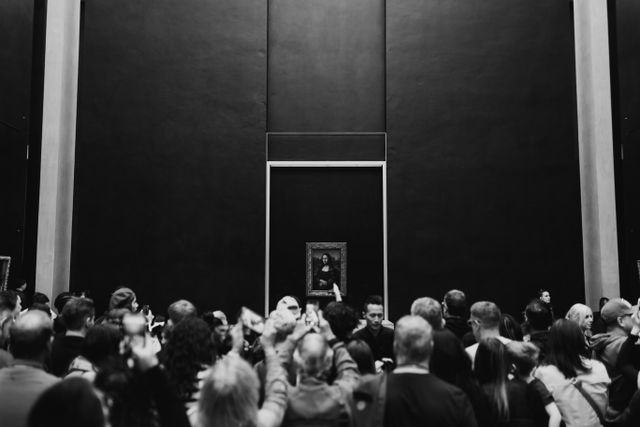
The Mona Lisa by Leonardo da Vinci
Created in the early 16th century, Mona Lisa is one of the most recognizable paintings in the world. Leonardo da Vinci portrayed a seated woman with a subtle expression and a landscape that seems to fade into the distance.
The painting is especially famous for Leonardo's use of sfumato, a technique that blends tones and colors gradually rather than relying on sharp outlines. This approach creates soft transitions between light and shadow, giving the face and landscape a lifelike quality.
Leonardo's attention to anatomy, perspective, and subtle expression helped demonstrate how painting could convey psychological depth as well as physical appearance.
Why it changed art history: Mona Lisa became an enduring example of Renaissance interest in observation, human expression, and the relationship between art and science.
The Last Supper by Leonardo da Vinci
Leonardo's The Last Supper, painted in the late 15th century, depicts the moment Jesus announces that one of his disciples will betray him. Rather than presenting the figures as a static group, Leonardo arranged them in expressive clusters, capturing different reactions to the announcement.
The composition uses linear perspective to direct attention toward Jesus, whose figure forms the visual center of the scene. Gesture, facial expression, and spatial organization help communicate the drama of the moment.
The work has suffered significant deterioration because of Leonardo's experimental painting method, but its influence on religious art and visual storytelling remains substantial.
Why it changed art history: It showed how perspective, composition, and human emotion could work together to make a complex narrative visually powerful.
The Creation of Adam by Michelangelo
Painted on the ceiling of the Sistine Chapel in the early 16th century, The Creation of Adam illustrates the biblical moment when God reaches toward Adam to give him life.
Michelangelo's depiction emphasizes the human body, using anatomical detail, dramatic poses, and a carefully balanced composition. The nearly touching hands of God and Adam have become one of the most recognizable images in Western art.
The fresco reflects Renaissance humanism, which placed renewed emphasis on human potential, classical learning, and the study of the body.
Why it changed art history: Its monumental figures and expressive physicality helped establish a powerful model for representing the human form in European art.
The Night Watch by Rembrandt
Completed in 1642, The Night Watch is a large group portrait of a civic militia company in Amsterdam. Unlike many formal group portraits of its time, Rembrandt van Rijn presented the figures in motion, creating a scene that feels active rather than staged.
Dramatic lighting, varied gestures, and the arrangement of figures guide the viewer through the composition. The painting demonstrates how a group portrait could suggest a larger story instead of simply documenting the people involved.
Despite its popular English title, the scene is not actually set at night. The darkened appearance developed partly because the painting's surface and varnish changed over time.
Why it changed art history: Rembrandt expanded the possibilities of group portraiture through movement, atmosphere, and dramatic light.
The Third of May 1808 by Francisco Goya
Francisco Goya's The Third of May 1808, completed in 1814, depicts the execution of Spanish civilians by French soldiers during the Peninsular War.
The composition contrasts the anonymous firing squad with a central victim whose outstretched arms and brightly lit clothing draw attention to his vulnerability. The dark background and tense arrangement intensify the emotional impact.
Rather than presenting war as a glorious display of military power, Goya emphasizes fear, suffering, and the human cost of violence.
Why it changed art history: The painting became an influential example of art used to confront the brutality of war and question heroic representations of conflict.
Liberty Leading the People by Eugène Delacroix
Painted in 1830, Liberty Leading the People commemorates the July Revolution in France. Delacroix combines contemporary figures with an allegorical woman representing Liberty, who leads people across a barricade while holding the French tricolor flag.
The work is associated with Romanticism, an artistic movement that emphasized emotion, dramatic action, and individual experience. Its energetic composition and strong contrasts create a sense of urgency.
The painting also combines historical events with symbolic imagery, making it more than a straightforward record of a revolution.
Why it changed art history: It demonstrated how political events and symbolic figures could be combined to create an emotionally charged image of national identity and popular struggle.
Impression, Sunrise by Claude Monet
Claude Monet painted Impression, Sunrise in 1872, depicting a harbor through loose brushwork, atmospheric color, and changing light. Rather than carefully defining every object, Monet focused on the overall visual impression of the scene.
The painting helped give Impressionism its name after a critic used the title mockingly when discussing the 1874 exhibition where it was shown.
Impressionist artists often worked outdoors and experimented with how light and color changed throughout the day. Their approach challenged academic expectations that favored polished surfaces, precise outlines, and traditional historical subjects.
Why it changed art history: It helped establish a movement that prioritized perception, modern life, and the changing effects of light over highly detailed realism.
A Sunday Afternoon on the Island of La Grande Jatte by Georges Seurat
Georges Seurat's large painting depicts people relaxing in a Parisian park. At first glance, the scene appears calm and orderly, but its surface is built from numerous small dots and marks of color.
Seurat developed a method associated with Pointillism and Neo-Impressionism, applying distinct colors that interact visually when viewed from a distance. His approach reflected an interest in color theory and the science of perception.
The carefully structured composition differs from the spontaneous appearance often associated with Impressionist painting.
Why it changed art history: It showed that color could be organized through a systematic method, influencing later experiments with color, form, and visual perception.
The Starry Night by Vincent van Gogh
Painted in 1889 while Van Gogh was staying at an asylum in Saint-Rémy-de-Provence, The Starry Night depicts a nighttime landscape with swirling skies, bright stars, a crescent moon, and a village below.
Van Gogh used expressive brushstrokes and intensified colors to create a scene that feels emotionally charged rather than strictly realistic. The sky's movement and the contrast between the village and the surrounding landscape make the painting immediately recognizable.
Although Van Gogh did not achieve broad commercial success during his lifetime, his work later became central to the development of modern art.
Why it changed art history: Its expressive use of color and brushwork helped demonstrate how painting could communicate subjective experience rather than simply reproduce what the eye sees.
Les Demoiselles d'Avignon by Pablo Picasso
Pablo Picasso completed Les Demoiselles d'Avignon in 190The painting depicts five women in a brothel, using angular forms, fragmented bodies, and faces influenced in part by Iberian sculpture and African art.
Its distorted figures challenged conventional ideas about perspective, anatomy, and the representation of the human body. The work is widely regarded as a major precursor to Cubism, the movement Picasso developed with Georges Braque.
The painting's approach was radical for its time and continues to prompt discussion about artistic innovation, cultural influence, and the representation of women.
Why it changed art history: It helped break with traditional perspective and paved the way for new approaches to depicting objects and figures from multiple viewpoints.
The Persistence of Memory by Salvador Dalí
Salvador Dalí's The Persistence of Memory, created in 1931, features melting clocks draped across a strange, dreamlike landscape. Familiar objects appear in an impossible setting, creating a scene that feels both recognizable and unsettling.
The painting is associated with Surrealism, a movement that explored dreams, the unconscious, and unexpected combinations of images. Dalí's precise technique makes the impossible scene appear unusually convincing.
The work's meaning remains open to interpretation, encouraging viewers to consider time, memory, perception, and the instability of everyday reality.
Why it changed art history: It became one of Surrealism's most recognizable images, showing how realistic technique could be used to create irrational and psychologically suggestive scenes.
Campbell's Soup Cans by Andy Warhol
Andy Warhol's Campbell's Soup Cans, created in 1962, consists of repeated images of familiar commercial soup packaging. Instead of choosing a traditional subject such as a landscape or historical figure, Warhol focused on a product found in everyday consumer culture.
The work is closely associated with Pop Art, which drew inspiration from advertising, mass media, popular imagery, and consumer goods. Warhol's approach challenged distinctions between fine art and commercial design.
Repetition also raises questions about originality, mass production, and the role of the artist in an increasingly commercial society.
Why it changed art history: It helped redefine acceptable subjects and methods in contemporary art by bringing ordinary consumer imagery into the gallery.
How These Artworks Changed the Direction of Art
Each of these works emerged from a different historical context, but their influence extends beyond the periods in which they were created.
|
Artwork |
Artist |
Major Artistic Contribution |
|
Mona Lisa |
Leonardo da Vinci |
Subtle expression and sfumato |
|
The Last Supper |
Leonardo da Vinci |
Perspective and narrative composition |
|
The Creation of Adam |
Michelangelo |
Monumental human figures |
|
The Night Watch |
Rembrandt |
Dynamic group portraiture |
|
The Third of May 1808 |
Francisco Goya |
Emotional depiction of war |
|
Liberty Leading the People |
Eugène Delacroix |
Romanticism and political symbolism |
|
Impression, Sunrise |
Claude Monet |
Impressionist treatment of light |
|
A Sunday Afternoon on the Island of La Grande Jatte |
Georges Seurat |
Systematic color and Pointillism |
|
The Starry Night |
Vincent van Gogh |
Expressive brushwork and color |
|
Les Demoiselles d'Avignon |
Pablo Picasso |
Early Cubist experimentation |
|
The Persistence of Memory |
Salvador Dalí |
Surrealist imagery |
|
Campbell's Soup Cans |
Andy Warhol |
Pop Art and consumer culture |
Together, these artworks illustrate a gradual expansion of what art could do. Artists moved from exploring perspective and anatomical realism to emphasizing emotion, experimenting with color, fragmenting forms, and questioning the boundaries between art and everyday life.
This history was not a simple progression in which one style replaced another. Different movements overlapped, and artists often challenged several traditions at once. Nevertheless, these works provide useful reference points for understanding major changes in Western art.
Conclusion
Famous artworks become historically important for many reasons. Some introduce new techniques, others respond to political and social events, and some challenge the definition of art itself.
From Leonardo da Vinci's carefully observed figures to Andy Warhol's images of consumer products, these works demonstrate how artistic ideas evolve alongside changes in society and culture.
Exploring influential artworks can deepen your understanding of art history and help you recognize the ideas behind different styles. More importantly, it offers an opportunity to experience how a single image can change the way people see the world.
Frequently Asked Questions
Start by observing the subject, colors, composition, and techniques. Then learn about the artist's historical context and the artistic movement associated with the work. Comparing artworks from different periods can reveal how styles and ideas changed over time.


Was This Article Helpful?
Click on a star to rate it!
Thank you for your vote!
Average Rating: 0/5 Votes: 0
Be the first to rate this post!

Proficient background in project planning, execution, and continuous improvement. Experienced in analyzing ideas and forecasting project success, defining requirements and timelines, and managing communication across cross-functional teams. Skilled in creating and maintaining project documentation, automating processes, and making data-driven decisions in critical situations.
View LinkedIn ProfileLatest Posts

Lifestyle Design for Personal Freedom

Outdoor DIY Projects for Your Backyard
Fashion Weeks and Their Cultural Impact