Ceramics and Pottery: Getting Started with Clay
Ceramics and pottery are age-old crafts that offer a wonderful blend of creativity and hands-on experience. Whether you're looking to dive into a new hobby or refine your artistic skills, working with clay can be both rewarding and therapeutic. This guide will help you embark on your journey into the world of ceramics and pottery.
Understanding the Basics

Types of Clay
- Earthenware: This low-fire clay is great for beginners due to its ease of use. It remains porous unless glazed, making it ideal for decorative pieces.
- Stoneware: A more durable, mid to high-fire clay that is less porous and perfect for functional items like mugs and plates.
- Porcelain: Known for its strength and fine, translucent finish, this high-fire clay is more challenging to work with and is typically used for delicate, fine ceramics.
Essential Tools and Equipment
- Clay: Choose the type of clay that suits your project needs.
- Pottery Wheel: Used for creating symmetrical pieces. Electric wheels are user-friendly for beginners.
- Kiln: A high-temperature oven necessary for firing your clay pieces. Many beginners use community studio kilns.
- Basic Tools: Includes wire cutters (for cutting clay), rib tools (for shaping), loop tools (for carving), and sponges (for smoothing).
Setting Up Your Workspace
Choosing a Space: Select a well-ventilated, well-lit area in your home or studio. Ensure it’s a space where you can comfortably make a mess, as working with clay can get quite dirty.
Organizing Your Tools: Keep your tools, materials, and finished pieces organized with shelves and containers. A sturdy table or workbench will be essential for your projects.
Basic Techniques
Hand-Building Techniques
- Pinching: Create small bowls and cups by pinching a ball of clay with your fingers to form the desired shape.
- Coiling: Roll out long coils of clay and stack them to build the walls of larger pieces like vases and planters.
- Slab Building: Roll out flat slabs of clay, cut them into shapes, and assemble them to form larger structures or textured surfaces.
Throwing on the Wheel
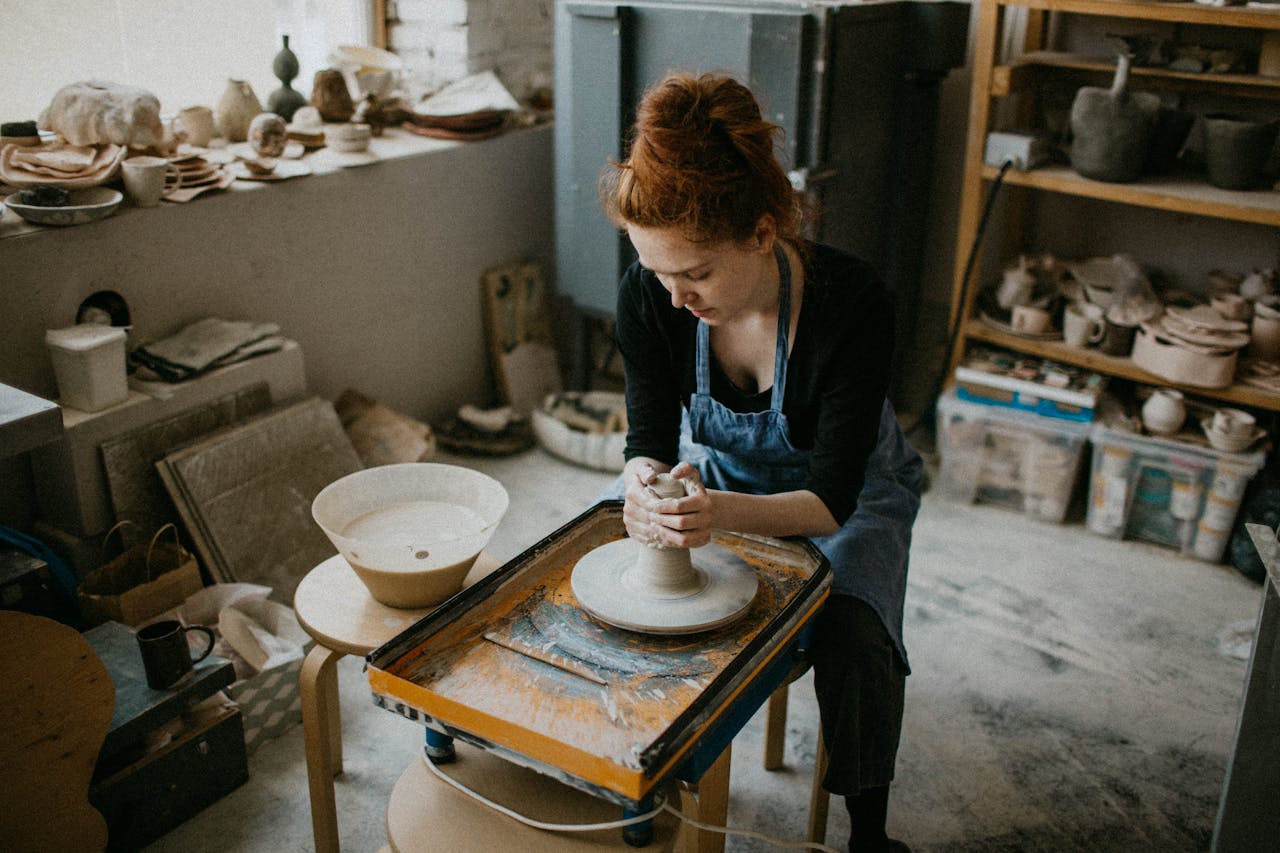
- Centering: Place your clay on the wheel and use your hands to center it. This is crucial for creating balanced, symmetrical pieces.
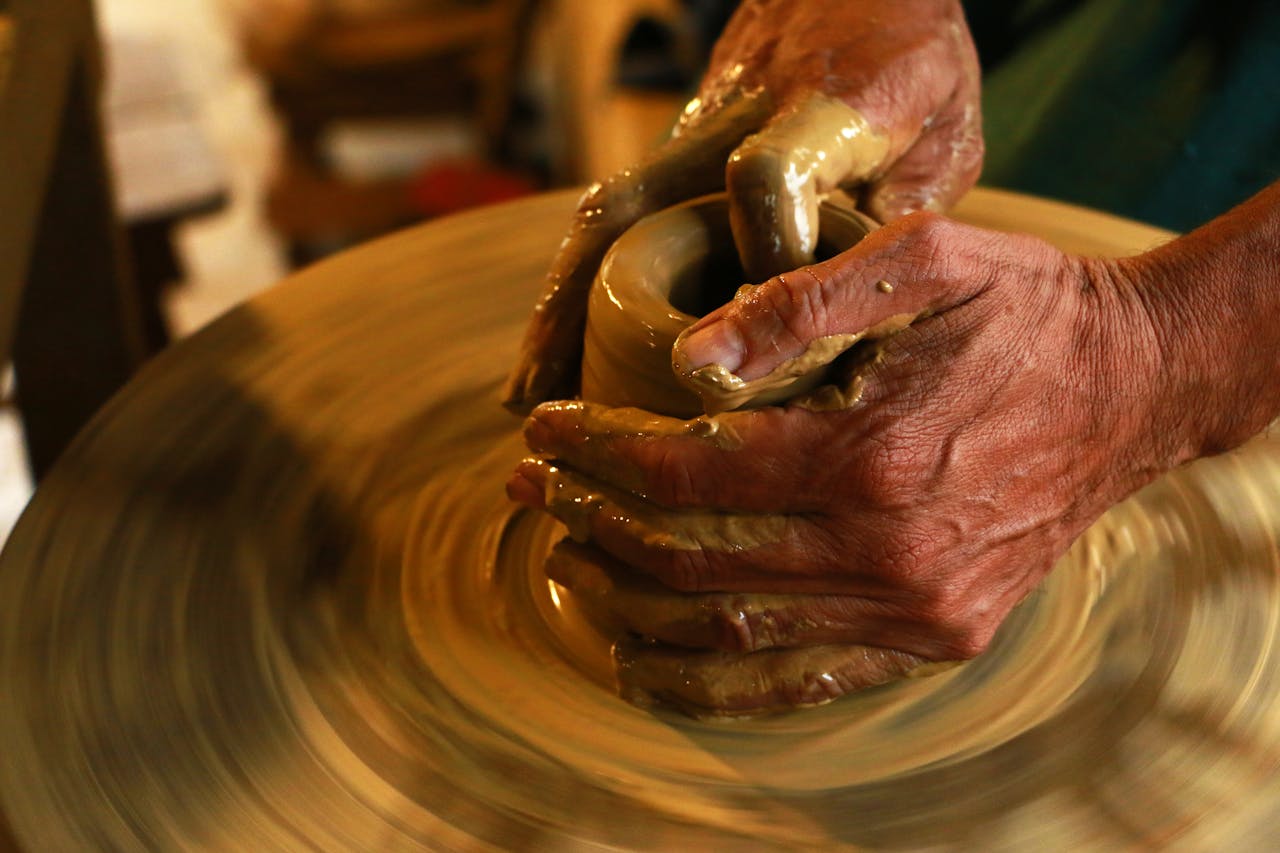
- Opening: Once centered, use your thumbs to create an opening in the middle of the clay.
- Pulling Up: Gently pull the walls of the clay upwards to shape your piece, maintaining even pressure to keep the walls consistent in thickness.
Firing and Glazing
Bisque Firing: After shaping your pieces, they need to dry completely before the first firing, known as bisque firing. This process hardens the clay, making it easier to handle for glazing.
Glazing: Glazing adds color and a glassy finish to your ceramics. Dip, brush, or spray your glaze onto your bisque-fired pieces, then fire them again in the kiln to achieve the final, glossy appearance.
Glaze Firing: This second firing, called glaze firing, vitrifies the glaze and finalizes your piece. Different clays and glazes require specific firing temperatures, so always follow guidelines to prevent damage.
Exploring Advanced Techniques
Slip Casting: Slip casting involves pouring liquid clay (slip) into plaster molds to create uniform pieces. This technique is ideal for producing multiple identical items.
Surface Decoration: Explore techniques such as sgraffito (scratching designs into the clay surface), underglazing (applying colored slips), and carving to add intricate details to your work.
Combining Techniques: As you gain confidence, try combining hand-building and wheel-throwing techniques to create unique, complex pieces.
Resources and Learning Opportunities
Classes and Workshops: Local art centers, community colleges, and pottery studios often offer classes and workshops for all skill levels. These can provide hands-on instruction and access to equipment.
Online Tutorials: Platforms like YouTube, Skillshare, and Udemy offer a plethora of tutorials and courses in ceramics and pottery, allowing you to learn at your own pace.
Pottery Books: Books like "The Complete Guide to Mid-Range Glazes" by John Britt and "Mastering Hand Building" by Sunshine Cobb offer valuable insights and techniques for both beginners and experienced potters.
Starting with ceramics and pottery is a journey filled with creativity and discovery. By understanding the basics, setting up a functional workspace, and practicing essential techniques, you can create beautiful, functional, and decorative pieces. Whether you’re hand-building or using a wheel, the possibilities with clay are endless. Embrace the process, experiment with different methods, and enjoy the tactile and rewarding experience of working with clay.


Was This Article Helpful?
Click on a star to rate it!
Thank you for your vote!

Average Rating: 4.9/5 Votes: 46
Be the first to rate this post!

Latest Posts

How Individuals Can Support Animal Protection: Simple Actions That Create Change

The Role of Consumers in Sustainability: How Everyday Choices Can Create Change

Human Rights Challenges in Conflict Zones: Protecting People During Crisis