Article Plan
- Why Cooking with Kids Is So Valuable
- Safety First: Setting Up a Kid-Friendly Kitchen
- Easy and Fun Recipes to Make Together
- 1. Rainbow Fruit Skewers
- 2. Mini Pita Pizzas
- 3. No-Bake Peanut Butter Energy Bites
- 4. Breakfast Banana Pancakes
- Table: Best Cooking Tasks by Age Group
- Tips to Make Cooking Extra Fun
- Conclusion
- Frequently Asked Questions about Cooking with Kids
Cooking with Kids: Fun and Safe Recipes to Try Together
Cooking with kids isn’t just about making food—it’s about making memories. Whether you’re baking muffins, mixing salads, or decorating pizzas, the kitchen becomes a playground for creativity, learning, and bonding. Want to get your little ones excited about cooking while keeping things safe and simple? Let’s dive in!
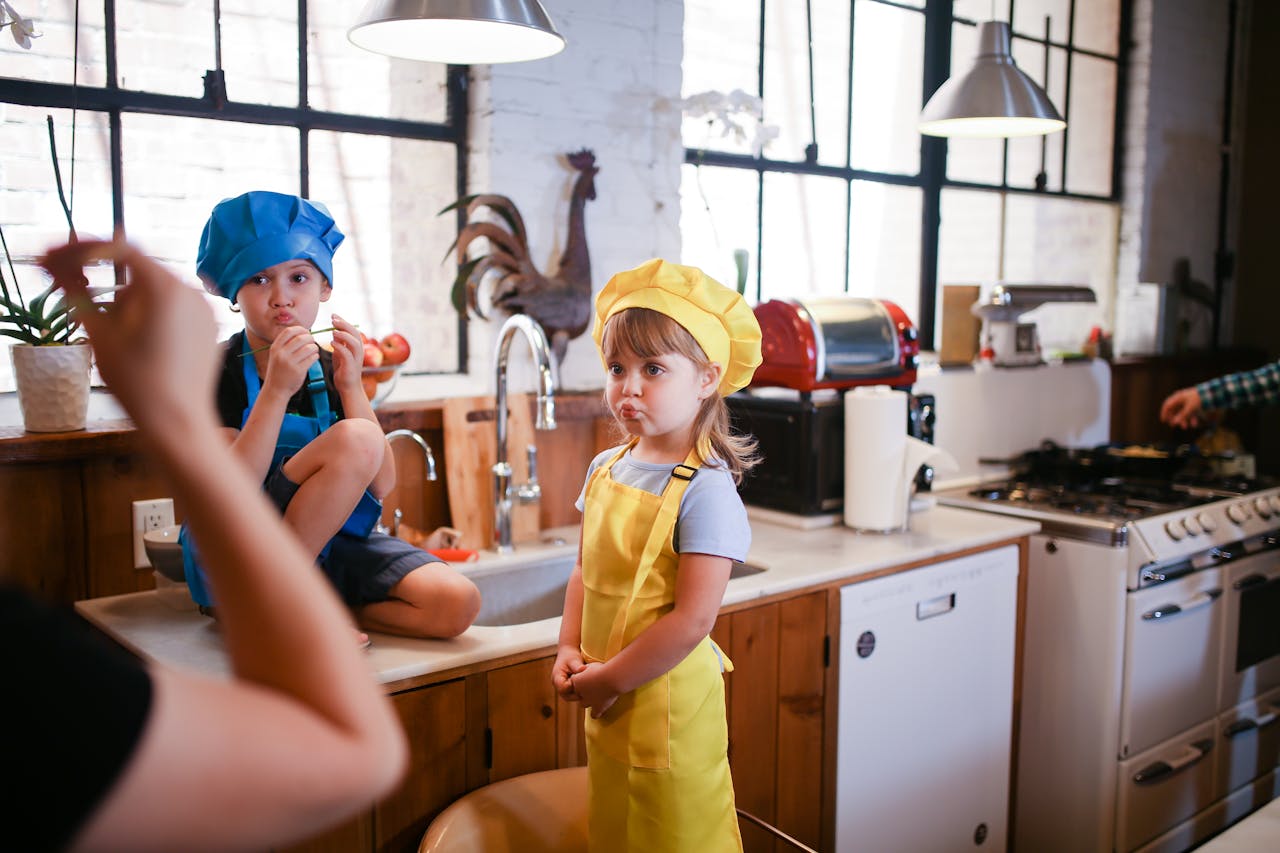
Why Cooking with Kids Is So Valuable
Cooking teaches kids practical life skills, boosts confidence, and sneaks in a bit of math, science, and creativity. Measuring flour becomes a math lesson. Watching dough rise becomes a science experiment. Decorating pancakes? That’s pure art.
Most importantly, it brings everyone together. Kids love being part of the process—and they’re more likely to try new foods when they helped make them!
Safety First: Setting Up a Kid-Friendly Kitchen
Before you start whisking and chopping, set a few ground rules. Safety should always come first.
Tips for a safe cooking environment:
- Keep sharp tools and heat sources out of reach
- Use kid-safe knives for younger children
- Teach “slow hands”—no running while holding kitchen tools
- Assign tasks based on age, like stirring for toddlers and chopping soft foods for older kids
- Wash hands often (kids love splashing water anyway!)
When safety is clear, the fun truly begins.
Easy and Fun Recipes to Make Together
Here are kid-friendly dishes that are simple, colorful, and perfect for little hands.
1. Rainbow Fruit Skewers
Kids love anything colorful, and this recipe is basically edible art.
Ingredients:
- Strawberries
- Pineapple chunks
- Kiwi slices
- Blueberries
- Grapes
- Wooden or reusable skewers
Let kids choose their color pattern and build their own rainbow.
2. Mini Pita Pizzas
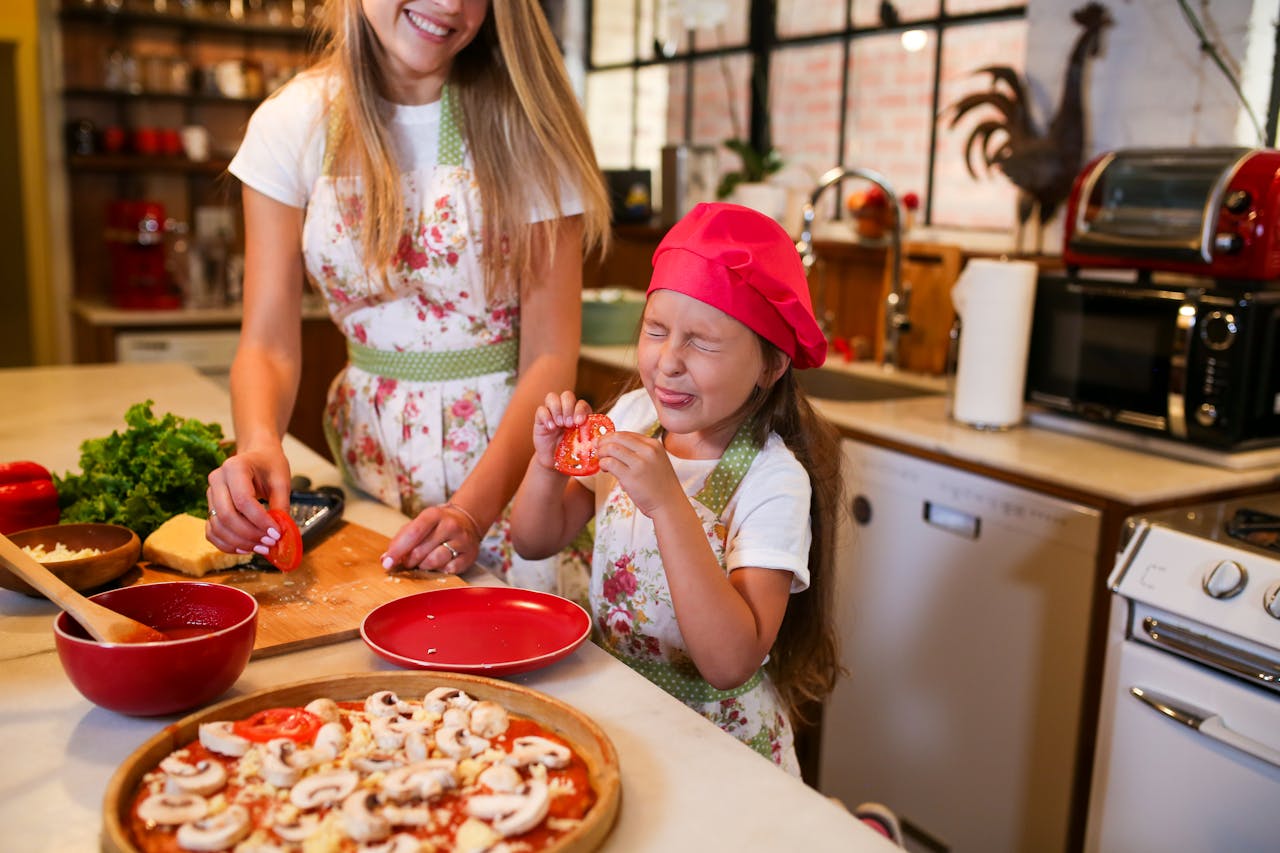
These are perfect because kids get to design their own “pizza canvas.”
Ingredients:
- Whole-wheat mini pitas
- Tomato sauce
- Shredded cheese
- Veggies (corn, peppers, olives)
Let kids spread sauce, sprinkle cheese, and create fun shapes with toppings.
3. No-Bake Peanut Butter Energy Bites
Great for older kids who love rolling dough-like mixtures.
Ingredients:
- Oats
- Peanut butter (or sunflower seed butter)
- Honey
- Chocolate chips
Mix, roll, chill—and enjoy!
4. Breakfast Banana Pancakes
Simple, fluffy, and healthy enough for any morning.
Ingredients:
- 1 banana
- 2 eggs
- A pinch of cinnamon
Mash, mix, and let kids help pour small pancake rounds onto the pan (an adult handles the heat).
Table: Best Cooking Tasks by Age Group
|
Age Group
|
Perfect Tasks
|
Why It Works
|
| 2-4 | Stirring, washing produce, sprinkling toppings | Simple, safe, and sensory-rich |
|
5-7
|
Measuring, mixing, assembling salads or pizzas | Builds math skills and creativity |
|
8-10
|
Chopping soft foods, sautéing with supervision, baking
|
Teaches responsibility and technique
|
| 11+ | Following full recipes, using appliances with guidance | Encourages independence and confidence |
Tips to Make Cooking Extra Fun
- Play music and turn it into a mini cooking show
- Let kids choose one ingredient each week
- Turn mistakes into lessons (and laughs)
- Celebrate the final dish—even if it’s a little messy!
Remember: the goal isn’t perfection—it’s connection.
Conclusion
Cooking with kids is one of the most joyful activities you can share. It teaches them skills, sparks creativity, and builds confidence—all while giving you precious time together. With safe setup, simple recipes, and a playful attitude, the kitchen can become your favorite family hangout.
So grab the aprons, roll up the sleeves, and get ready to create delicious memories—one recipe at a time.
Frequently Asked Questions about Cooking with Kids
Start with child-safe knives and soft foods like bananas or mushrooms.
Assign small tasks, give them choices, or let them decorate at the end.
Let them choose ingredients—kids often eat what they help create.
Yes! Simple tasks like washing veggies or stirring are perfect.
Prep ingredients in small bowls and give each child a designated “work zone.”


Was This Article Helpful?
Click on a star to rate it!
Thank you for your vote!

Average Rating: 4.6/5 Votes: 26
Be the first to rate this post!

Expert in backend development and database architecture. Specializes in building, optimizing, and maintaining scalable PHP applications, designing efficient database structures, and ensuring data integrity and performance. Experienced in working with relational databases, writing optimized queries, and integrating backend systems with APIs and business logic to support reliable, high-performance web solutions.
View LinkedIn ProfileLatest Posts

How Individuals Can Support Animal Protection: Simple Actions That Create Change
The Role of Consumers in Sustainability: How Everyday Choices Can Create Change

Human Rights Challenges in Conflict Zones: Protecting People During Crisis